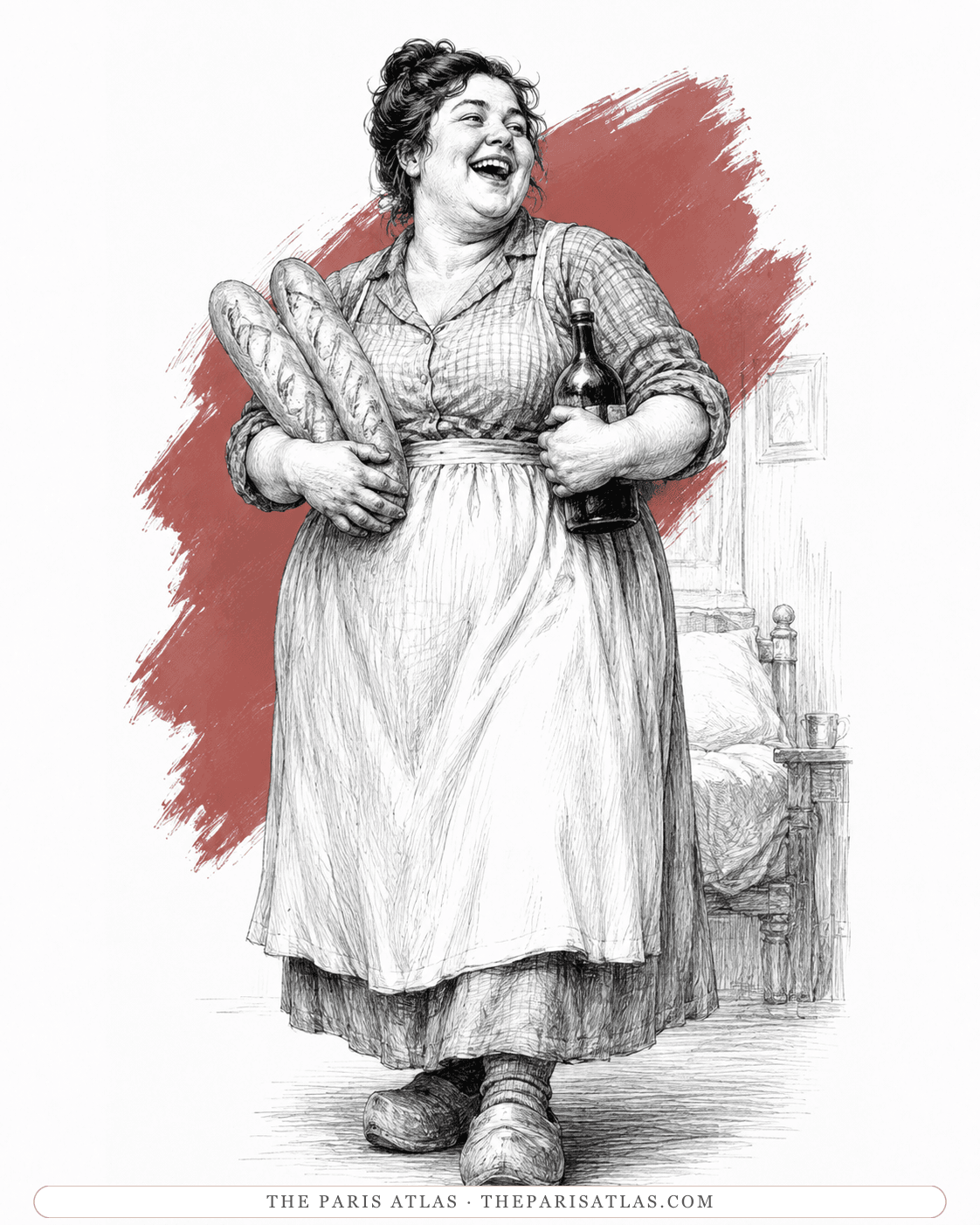
Maria
The peasant girl at Valenti's hotel who found him starving on the fifth day, noticed the deposit still owing on an empty oil can in the corner, and came back with bread and wine.
In the story Valenti tells, to get food into a man she has found starving. She spots the three francs fifty he has forgotten, runs to the grocer and back in three minutes, and stands over him while he eats.
The book

At a glance
- A lodger at the Hôtel Suzanne May, in the story Valenti tells
- Valenti, the waiter on the fourth floor of the Hôtel X
- Chapter XV
Who they are in the book
Spoiler-freeMaria comes into the book inside a story that Valenti, the fourth-floor waiter at the Hôtel X, told George Orwell during a slack hour on the service lift. Valenti had once gone five days without food in a cheap hotel in the rue Sainte Éloise in the Latin Quarter, called the Hôtel Suzanne May after a prostitute of the time of the Empire. On the fifth afternoon, half mad with hunger, he knelt down and prayed for money to a faded print of a woman's head on his wall, which he had decided must be Sainte Éloise. Five minutes later there was a bang at the door. Maria lived in the same hotel. Valenti describes her as a big fat peasant girl, very stupid but a good sort.
She cried out at the sight of him and said he looked more like a corpse than a man. He explained that he had not eaten in five days, that he had five sous in the world, and that she was welcome to look round the room for anything left worth pawning. She poked about among the rubbish on the floor and then got very excited. She had picked up an empty oil bidon he had bought weeks earlier for a lamp, and asked whether he had not paid three francs fifty deposit on it. He had, and had forgotten it through five days of starving. She took it to the grocer at the corner and was back in three minutes with two pounds of bread under one arm and a half-litre of wine under the other, and stood with her hands on her hips watching him eat.
There was a coda. Valenti, fed, remembered his promise of a candle to Sainte Éloise and gave up his cigarettes to pay for it. Maria asked what had put Sainte Éloise into his head. He pointed at the print on the wall. She looked at it and laughed until she had to hold her sides, then told him it was not a saint at all: it was Suzanne May, the woman the hotel was named after. They agreed he owed the saint nothing, and he bought his cigarettes.
How Maria Is Portrayed
- How Valenti describes herA big fat peasant girl in sabots — very stupid, he says, and a good sort. Her great thick mouth fell open when she worked out what the empty can was worth, and she danced about the room hard enough that he thought the sabots would go through the floor.
- How she arrivesA bang at the door of a room in a hotel where she also lodged, and a shout that he looked more like a corpse than a man.
- The search of the roomTold there was nothing left to sell or pawn, she went through the rubbish on the floor herself rather than take his word for it.
- The bidonAn empty oil can bought weeks earlier, carrying a three-francs-fifty deposit that Valenti had forgotten through five days without food. She saw it in a corner and worked it out at once.
- Three minutesDown the stairs, Valenti says, like a herd of elephants, and back with two pounds of bread and a half-litre of wine.
- The picture on the wallShe recognised the print he had been praying to as Suzanne May, the prostitute the hotel was named for, and laughed until she had to hold her sides.
If you like Down and Out in Paris and London


If you like George Orwell
Explore authors with a similar voice, perspective, and influence.

Henry Miller
The Brooklyn dropout who arrived in Paris broke at thirty-eight and wrote the exuberant, banned books that ended American censorship.
View author
Louis-Ferdinand Céline
The doctor of the Paris slums who wrote the century's blackest, funniest novel — and changed the sound of French prose.
View author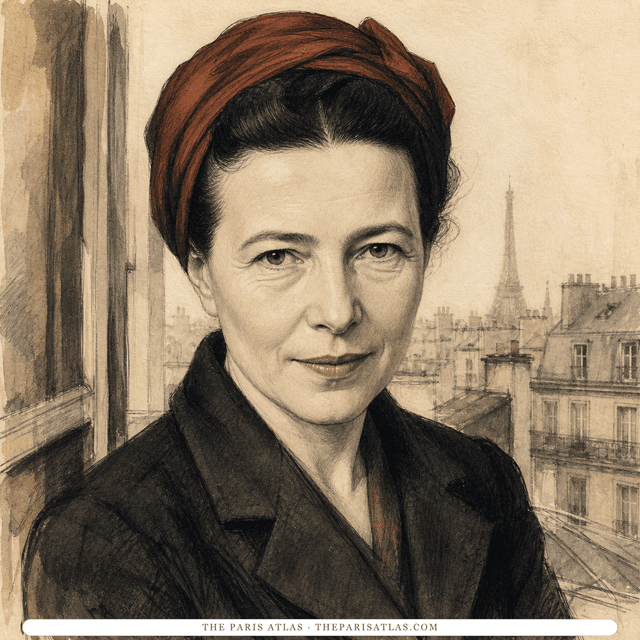
Simone de Beauvoir
French writer and philosopher whose novels, memoirs, and social analysis examined freedom, gender, responsibility, aging, and the material conditions that shape a life.
View author