The Tramp Major at Lower Binfield
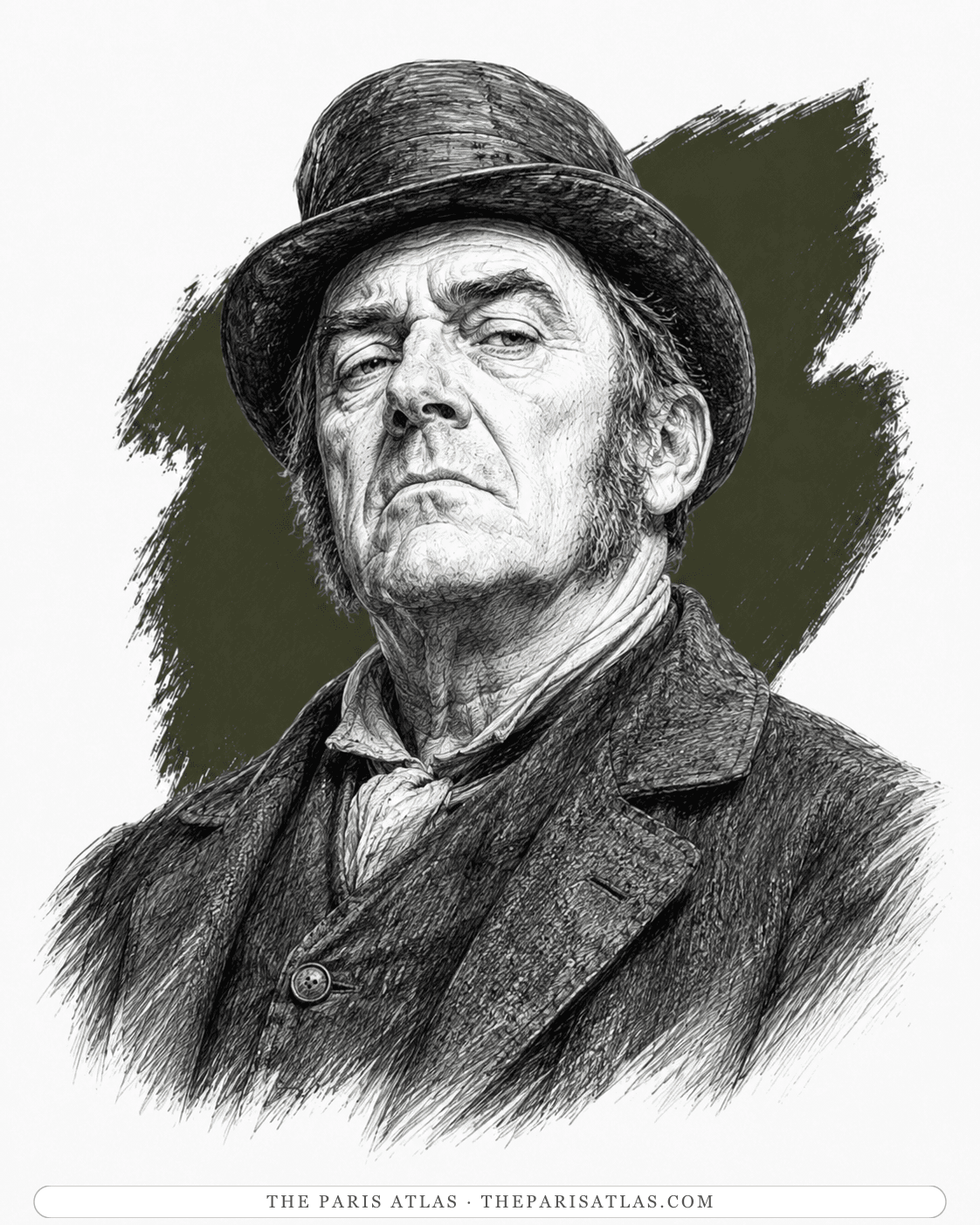
The workhouse official who runs the casual ward at Lower Binfield in Kent. Tramps on the road call him a tyrant. He decides the narrator is a gentleman, and spends the weekend quietly making an exception of him.
To run his ward properly, and to see a gentleman treated as one. Told that Orwell is a journalist and therefore a gentleman, he calls it bad luck and then spends the weekend making a quiet exception of him.
The book

At a glance
- The workhouse official in charge of the casual ward at Lower Binfield, Kent
- A job title, not a name; every spike has its own Tramp Major
- About forty, stiff and soldierly, an old soldier
- Known on the road as a tyrant, which Orwell finds overstated
- “Guv'nor”, after deciding he is a gentleman
- Chapters XXXIV and XXXV
Who they are in the book
Spoiler-freeA casual ward, or spike in tramps' usage, is the free overnight shelter attached to an English workhouse, and the Tramp Major is the official who runs it. It is a job title rather than a name. George Orwell passes through several spikes in the London half of the book and each has its own Tramp Major, so the man here is one of them: the one at Lower Binfield, in Kent, and the only one the book draws as an individual. Orwell explains the post the first time he meets one. The work is to supervise casuals, and the man doing it is generally a workhouse pauper himself, which puts a pauper's standing behind a warder's powers.
This one's name reaches Orwell before he does. Walking into Lower Binfield, Paddy Jaques buries their last fivepence in the ground, because the Tramp Major there was renowned as a tyrant who might refuse to admit men carrying any money at all. The spike opens at six on a Saturday evening, which means the men will be held over the weekend. Orwell registers his trade as journalist, knowing as he says it that it is a foolish thing to say, and as soon as the men are lined up for the search his name is called sharply down the line. The man calling it turns out to be stiff and soldierly, about forty, with an old soldier's gruffness, and not looking the bully he had been represented.
He asks whether being a journalist makes Orwell a gentleman, is told that it probably does, gives him another long look and says that this is bloody bad luck, guv'nor. Orwell had expected a few more questions to expose the lie, which could have meant prison. Instead he spends the weekend receiving what he calls unfair favouritism and a kind of deference: no search, a clean towel to himself in the bathroom, and at ten on the Sunday morning the workhouse kitchen, the most coveted of the odd jobs. Orwell credits all of it to one word in an old soldier's ear. On the Monday, letting the men out, the same official hands a Glasgow tramp back the tin of cigarette ends taken from him at the search, and dislodges from the railings a man who says he is too tired to walk, starting him off with a kick. Orwell's narration calls that man the imbecile, and adds in a parenthesis that there is one in every collection of tramps.
How The Tramp Major at Lower Binfield Is Portrayed
- A job title, not a nameEvery spike has a Tramp Major and Orwell meets several. This is the one at Lower Binfield, and the only one in the book given a face, an age and a line of dialogue.
- The reputationKnown on the road as a tyrant who might turn away any man with money on him, which is why Paddy Jaques buries their last fivepence in the ground before the two of them present themselves at the gate.
- The man himselfStiff, soldierly, about forty, gruff in the manner of an old soldier. Orwell's first note on him is that he did not look the bully he had been represented.
- “Then you are a gentleman?”Orwell has given his trade as journalist and expects the lie to be found out. He is called out of the line, looked up and down, asked the question, and told that being a gentleman is bloody bad luck.
- The favoursNo search at the gate, a clean towel to himself in the bathroom, and the workhouse kitchen when the odd jobs are given out on Sunday morning. Orwell calls it unfair favouritism and puts it down to the word gentleman.
- The day-roomAfter breakfast and the doctor's inspection he herds the men into a limewashed dining-room and locks the door on them for ten hours. They smoke anyway, pocketing their cigarettes like schoolboys whenever they hear him coming.
- The last morningHe gives Scotty back the tin of cigarette ends confiscated at the search, and dislodges a man clinging to the railings, starting him off with a kick. The man had said he was too tired to walk, and Orwell's narration calls him the imbecile. Orwell records both acts and comments on neither.
If you like Down and Out in Paris and London


If you like George Orwell
Explore authors with a similar voice, perspective, and influence.

Henry Miller
The Brooklyn dropout who arrived in Paris broke at thirty-eight and wrote the exuberant, banned books that ended American censorship.
View author
Louis-Ferdinand Céline
The doctor of the Paris slums who wrote the century's blackest, funniest novel — and changed the sound of French prose.
View author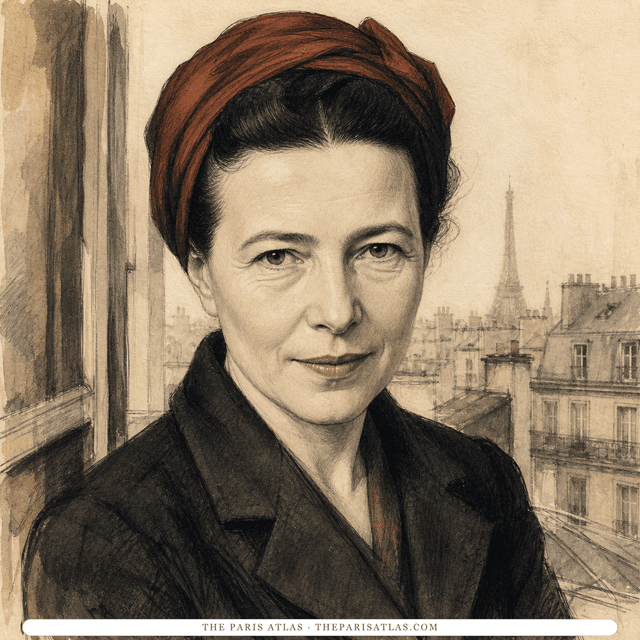
Simone de Beauvoir
French writer and philosopher whose novels, memoirs, and social analysis examined freedom, gender, responsibility, aging, and the material conditions that shape a life.
View author