Paddy Jaques
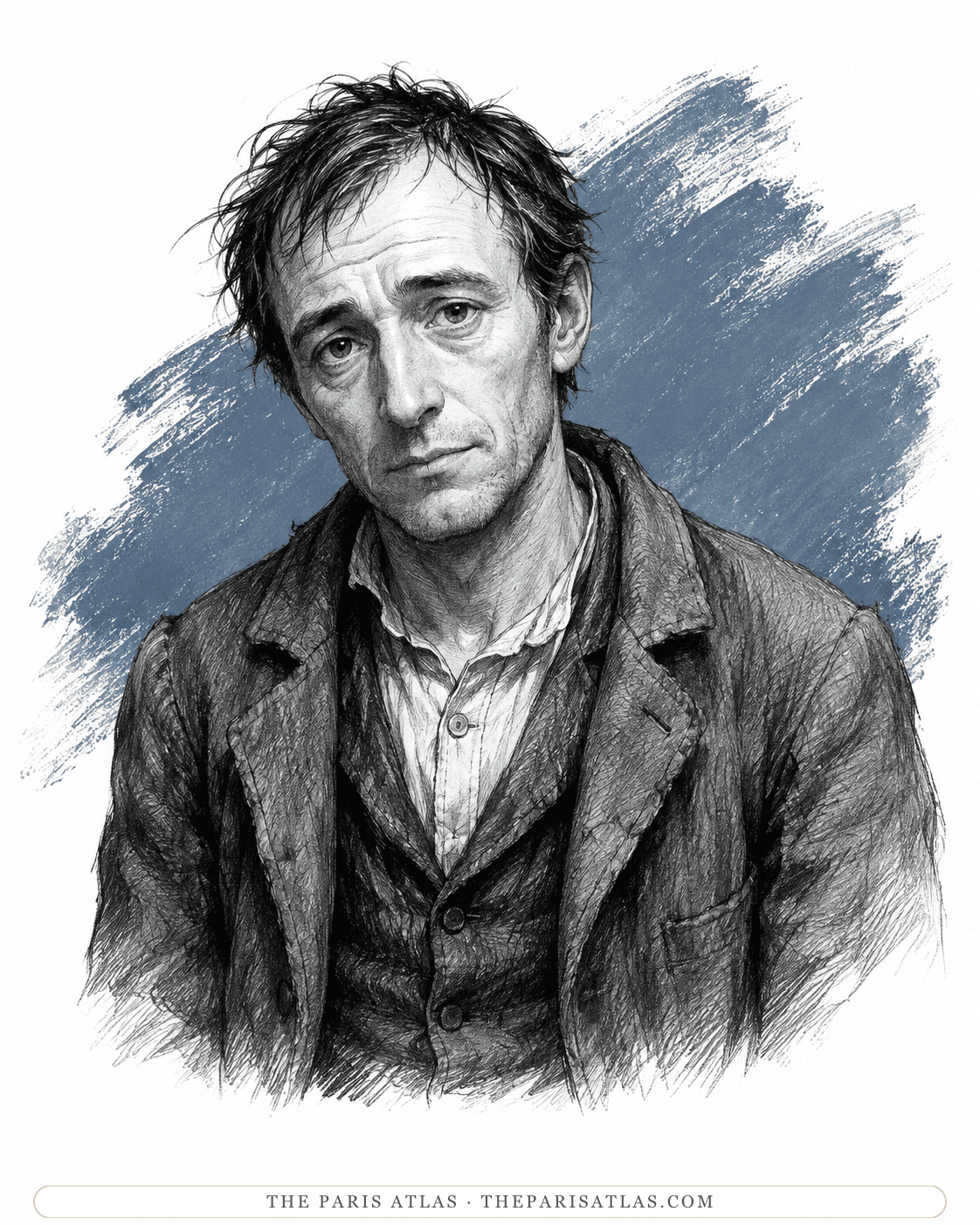
An Irish tramp the narrator meets peeling potatoes in a casual ward — "a melancholy pale man who seemed clean and decent" — and walks with for most of the London half.
Work, and the standing that would come back with it. He pines for work, Orwell writes, as an artist pines to be famous, and resents anyone holding a job he does not — an old man, a boy, a foreigner.
The book

At a glance
- Irish tramp, and Orwell's mate on the road for about a fortnight
- About thirty-five
- Raised in Ireland, two years' war service, then a metal polish factory until he lost the job two years earlier
- Tweed shooting-jacket and old evening trousers, the braid sewn back on when it came loose
- Bread and margarine, the 'tea-and-two-slices'; half a crown a day covered food, bed and tobacco
- A few shillings from glimming, which meant watching parked cars. Illegal, and unreliable
- Catholic; no confession for about seventeen years
- The London half, from the casual ward at Romton to the last page
Who they are in the book
Spoiler-freeGeorge Orwell made friends with Paddy Jaques in the yard of the casual ward at Romton, where the two of them had been set to peel potatoes until the doctor arrived. Paddy was going on to the next spike at Edbury and suggested they walk together. He was tallish, about thirty-five, with fair hair going grizzled and watery blue eyes, and cheeks lanked to the greyish colour that comes of living on bread and margarine. He was brought up in Ireland, served two years in the war, and worked in a metal polish factory until he lost the job two years before.
He was better dressed than most tramps and worked at staying so. He wore a tweed shooting-jacket and old evening trousers with the braid still on them, and sewed the braid back on when it came loose. He kept a razor and a bootbrush he would not sell, though he had long since sold his papers and his pocket-knife. None of it disguised him. Orwell says you would have known him for a tramp a hundred yards off, from the drifting walk and the hunched shoulders.
Paddy had two subjects of conversation, the shame of being a tramp and the best way of getting a free meal, and he kept up a monologue on them most of the waking day. He also had two years of practical knowledge and passed it on. He taught Orwell to live on half a crown a day for food, bed and tobacco together, and thought a single sound meal a day a wild extravagance. In the evenings he earned a few shillings glimming, which meant watching parked motor-cars for their owners, and which was illegal.
Orwell's account of him is unsparing, and it does not stop at the man. He calls Paddy abject and envious, then says plainly that malnutrition and not any native vice had done it, that two years of bread and margarine had left his mind and body compounded of inferior stuff, and that a few months of proper food would probably have made him fit for work again. The argument built around him is about idleness rather than money. An educated man can survive enforced leisure, but a man like Paddy, with the work habit in his bones and nothing to fill the time, is as miserable out of work as a dog on a chain.
How Paddy Jaques Is Portrayed
- His faceTallish, about thirty-five, with fair hair going grizzled and watery blue eyes. His features were good, but his cheeks had lanked to the greyish, dirty-in-the-grain colour Orwell puts down to a diet of bread and margarine. The one time the colour changes is when a pair of painted older women go past: the face flushes pale pink and he turns to stare after them.
- The voiceWhimpering and self-pitying, and going for most of the waking day. Orwell's summary is that he whimpered whenever he was not eating.
- The walkOrwell describes a drifting gait with the shoulders hunched forward, essentially abject. Watching him move, you felt instinctively that he would sooner take a blow than give one.
- The braidThe braid on his old evening trousers was the last visible scrap of respectability he had, and he treated it as such, sewing it back on whenever it worked loose. He had kept a razor and a bootbrush through everything else he sold.
- The bottle of milkOn the outskirts of Romton he stopped at a bottle of milk left by mistake on a doorstep, looked up and down an empty residential street, and stood over it hungrily. Then he turned away, saying it did a man no good to steal and that he had never stolen anything yet. Orwell's reading is that it was fear bred of hunger, and that two or three sound meals would have given him the nerve.
- Scrounging as a disciplineHe browsed the pavements without stopping, never missing a cigarette end or an empty packet, whose tissue paper he used for rolling. He tugged the handle of every automatic machine he passed, on the theory that a broken one will eject pennies. Walking into Edbury he pounced on a newspaper parcel, found two mutton sandwiches frayed at the edges, and insisted Orwell take half.
- Cups of tea and religionHe had taken cups of tea off the convents, the Baptists and the Church of England, and rated the convents most reliable. He was a Catholic who had not been to confession for about seventeen years but kept his religious feelings, and he wondered aloud what a man would do without religion.
- Print made him sickHe could read and loathed reading. Offered a public library on the road as somewhere to rest his legs, he preferred to wait on the pavement, saying the sight of all that print made him sick. He once asked Orwell whether Napoleon lived before Jesus Christ or after, and took a bookshop copy of Of the Imitation of Christ for blasphemy.
- The envyIt was aimed at men in work rather than at the rich, who were beyond his social horizon. An old man on a job was keeping able-bodied men out of work; a boy was taking the bread out of our mouths; and foreigners, in his account, were the cause of unemployment.
- MatchesHe owned a box of matches and Orwell never once saw him strike one. He cadged lights from strangers, went half an hour without a smoke rather than spend a match, and lectured Orwell for extravagance when Orwell struck his own.
Their fortnight ends without ceremony. Orwell's friend B. lends him a final two pounds, the job looking after a mentally disabled boy comes through, and the two men part in London a day or two after walking back from Lower Binfield.
If you like Down and Out in Paris and London


If you like George Orwell
Explore authors with a similar voice, perspective, and influence.

Henry Miller
The Brooklyn dropout who arrived in Paris broke at thirty-eight and wrote the exuberant, banned books that ended American censorship.
View author
Louis-Ferdinand Céline
The doctor of the Paris slums who wrote the century's blackest, funniest novel — and changed the sound of French prose.
View author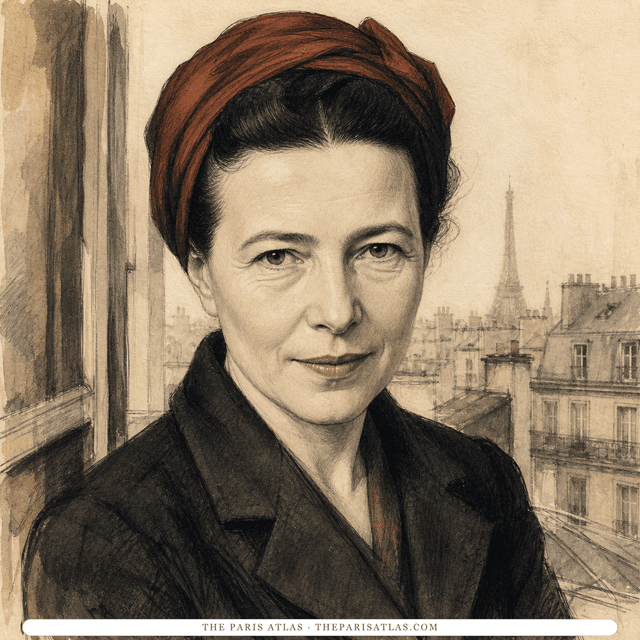
Simone de Beauvoir
French writer and philosopher whose novels, memoirs, and social analysis examined freedom, gender, responsibility, aging, and the material conditions that shape a life.
View author