Big Louis
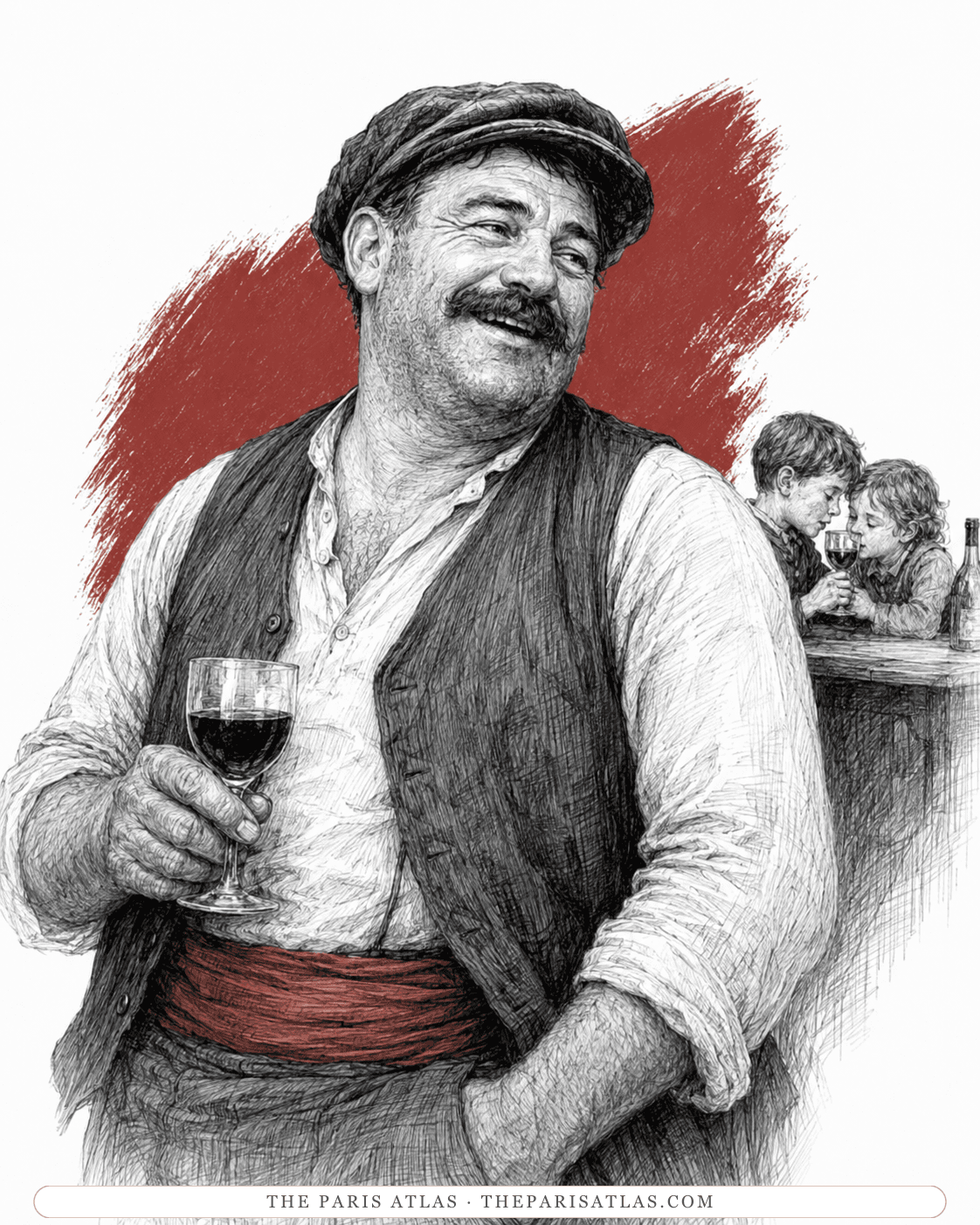
A bricklayer in the same bistro. Two of his children sat in a corner sharing a glass of sirop while the singing went on. By the small hours he was drunk on the floor, barking and pretending to be a dog, and the others had tired of him and kicked at him as they went past.
The book

At a glance
- A bricklayer who drank in the bar at the foot of Orwell's hotel in Paris
- Never given beyond Big Louis
- Two children, described by Orwell as illegitimate, who were in the bar with him
- A brick-floored room fifteen feet square at the foot of the Hôtel des Trois Moineaux, packed with twenty people on a Saturday night
- Chapter XVII, twice
Who they are in the book
Spoiler-freeThe English writer George Orwell published Down and Out in Paris and London in 1933. It is his own account of the months he spent washing dishes in Paris hotel kitchens and then tramping the roads of England. Big Louis belongs to the Paris half. He was a bricklayer who drank in the bar at the foot of the cheap hotel where Orwell was lodging, and the book never gives him any more of a name than that.
The bar was a brick-floored room about fifteen feet square, half underground, and on a Saturday night twenty people were packed into it. Orwell was by then working as a plongeur — the dishwasher and general drudge of a French kitchen — at a large hotel near the Place de la Concorde, which left him thirty francs a week to spend on drink. Everyone in the room was singing or shouting at the top of his voice. Men played darts and threw dice for drinks.
Two of Big Louis's children were in the room. Orwell describes them as his illegitimate children, and they sat in a corner sharing one glass of sirop, a sweet fruit cordial drunk with water, while the adults got through litre bottles of wine.
The chapter is really about how the evening ended. By one in the morning the pleasure had gone out of it. Madame F., who kept the hotel and served behind the bar, had begun watering the wine. Men were turning quarrelsome, and the girls left when hands were thrust into their clothes. Big Louis was drunk by then and crawling about the floor, barking and pretending to be a dog. The others had had enough of him and kicked at him as he went past.
By half past one, Orwell writes, the last drop of pleasure had evaporated and left nothing but headaches, and the company could see what it actually was: a crew of underpaid workmen grown squalidly and dismally drunk. He adds that he thought the two hours of wild happiness worth the headache, and that for a lot of men in the quarter the Saturday drinking bout was the one thing that made life worth living.
How Big Louis Is Portrayed
- His tradeA bricklayer. Orwell mentions him twice and calls him the bricklayer both times. Nothing else is said about his work, his age or where he came from.
- His two children in the barEarly in the evening, two of his children sat in a corner of the room sharing a single glass of sirop, a sweet fruit cordial. Orwell describes them as his illegitimate children.
- What he did when he was drunkBy one in the morning he was crawling about the floor of the bar, barking and pretending to be a dog.
- How the room treated himThe others grew tired of the performance and kicked at him as he crawled past. Orwell sets it down without comment, alongside the other signs that the evening had gone bad.
- Why he is in the bookThe chapter follows one Saturday night from noisy happiness to a squalid ending, and Big Louis is one of the men Orwell points to as the night turns. No lesson is drawn from him, and he is not mentioned again.
If you like Down and Out in Paris and London


If you like George Orwell
Explore authors with a similar voice, perspective, and influence.

Henry Miller
The Brooklyn dropout who arrived in Paris broke at thirty-eight and wrote the exuberant, banned books that ended American censorship.
View author
Louis-Ferdinand Céline
The doctor of the Paris slums who wrote the century's blackest, funniest novel — and changed the sound of French prose.
View author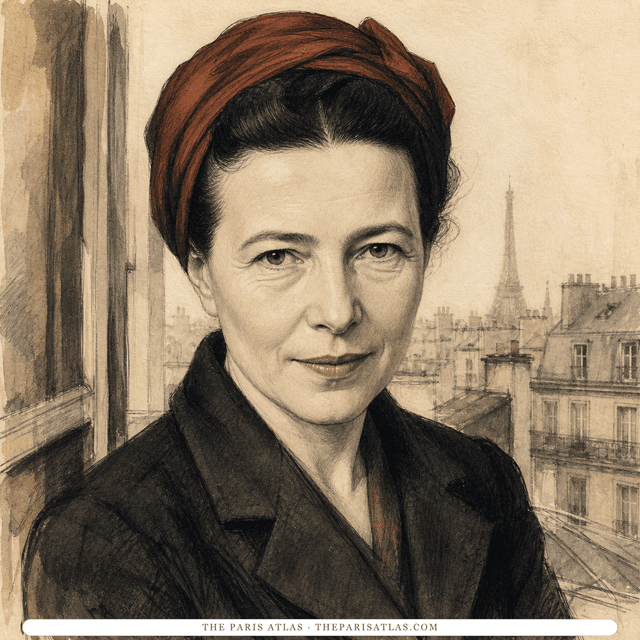
Simone de Beauvoir
French writer and philosopher whose novels, memoirs, and social analysis examined freedom, gender, responsibility, aging, and the material conditions that shape a life.
View author