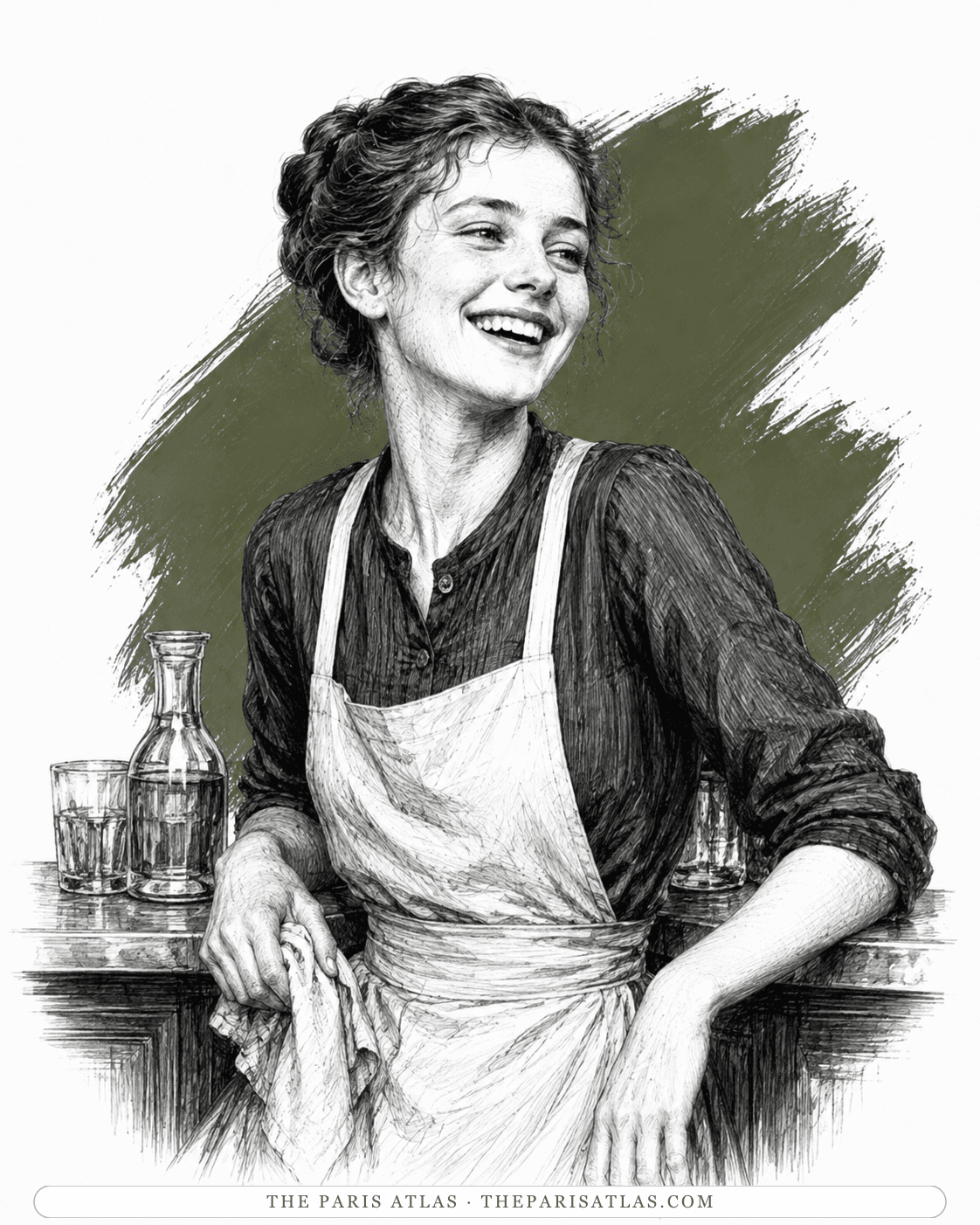
The girl in the bistro
A girl in a bistro near the narrator's hotel who worked from seven in the morning until midnight for a whole year, sitting down only for meals. Asked to a dance, she laughed and said she had not been farther than the street corner in months. She was consumptive, and died about the time Orwell left Paris. He puts her in the book as the answer to his own self-pity about a seventeen-hour day.
The book

At a glance
- A girl working in a bistro near Orwell's hotel in Paris
- Seven in the morning to midnight, for a year, sitting down only to eat
- Tuberculosis, then called consumption
- She died at about the time Orwell left Paris
- Chapter XXI
Who they are in the book
Spoiler-freeGeorge Orwell's Down and Out in Paris and London, published in 1933, is his own account of the months he spent washing dishes in Paris hotel kitchens and then tramping the roads of England. This girl worked in a small bar near the hotel where he lodged. He never gives her a name.
Her hours were seven in the morning until midnight, and she kept them for a whole year. The only time she sat down was to eat. Seven to midnight is a seventeen-hour day, which is exactly the day Orwell had by then decided he could not survive: he was washing up at a restaurant called the Auberge de Jehan Cottard, and had just found a spare quarter of an hour to write to a friend in London begging for any job at all, so long as it allowed him more than five hours' sleep.
He asked her once to come to a dance. She laughed, and said she had not been farther than the street corner in several months.
She had tuberculosis, the disease the book calls consumption, and she died at about the time Orwell left Paris. He sets her down at the exact point where he is admitting he wants out, and says that thinking about people like her is a good cure for feeling sorry for yourself. Thousands of people in Paris were working those hours, he writes, and would go on working them not for a few weeks but for years.
How The girl in the bistro Is Portrayed
- Her hoursSeven in the morning until midnight, every day for a year. She sat down only for her meals.
- The danceOrwell asked her to come to a dance. She laughed at the idea and told him she had not been farther than the street corner in several months. It is the only thing she says in the book.
- Her illnessShe had tuberculosis, which the book calls consumption, and she died around the time Orwell left Paris. He gives no more than that — not her name, her age, or where she came from.
- Why she is in the bookOrwell has just written to London asking to be rescued from a seventeen-hour day he had been doing for a fortnight. She had done the same hours for a year. He uses her against his own self-pity, and points out that thousands of people in Paris restaurants were working like that and would keep on for years.
If you like Down and Out in Paris and London


If you like George Orwell
Explore authors with a similar voice, perspective, and influence.

Henry Miller
The Brooklyn dropout who arrived in Paris broke at thirty-eight and wrote the exuberant, banned books that ended American censorship.
View author
Louis-Ferdinand Céline
The doctor of the Paris slums who wrote the century's blackest, funniest novel — and changed the sound of French prose.
View author
Simone de Beauvoir
French writer and philosopher whose novels, memoirs, and social analysis examined freedom, gender, responsibility, aging, and the material conditions that shape a life.
View author