The cook at the Auberge
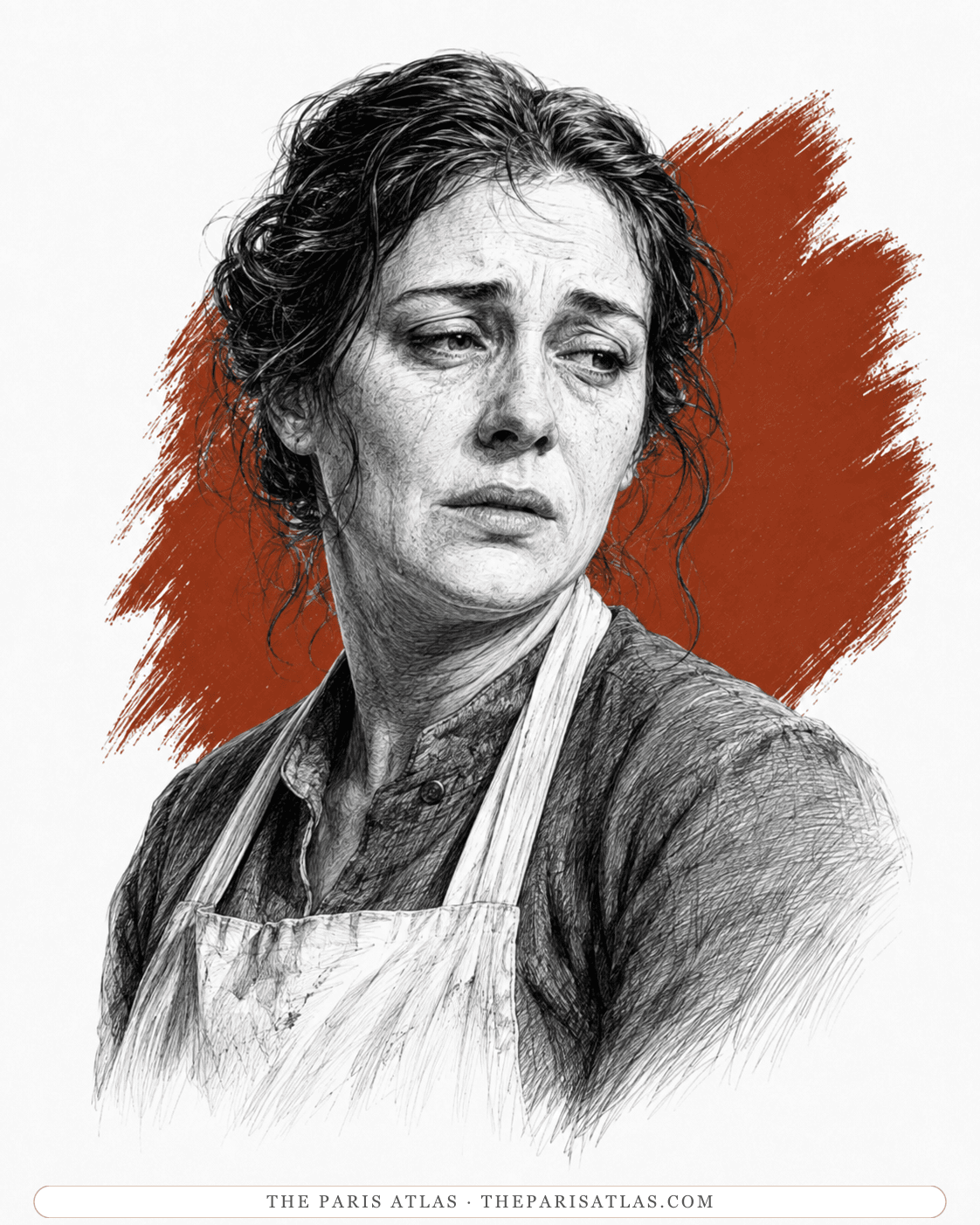
The Baltic Russian woman who runs the kitchen at the Auberge de Jehan Cottard, the underfunded Paris restaurant where the narrator washes dishes. She works from eight in the morning to midnight, and the book never gives her a name.
In Orwell's telling she wants the people around her to know she was made for better things. Vienna, Tolstoy and a Russian countess come up in the middle of her orders, and the food she takes at midnight is for a husband who cannot get out of bed.
The book

At a glance
- Cook at the Auberge de Jehan Cottard, the restaurant where Orwell works as plongeur
- Never given
- A Baltic Russian; five feet tall and a yard across the hips
- A singer, by her own account, before she came down to cooking
- Eight in the morning to midnight, seven days a week
- One room the size of a bathroom, two candles once the light fuses, fewer pans than the menu needs
- Studied music at Vienna; an aunt who was a Russian countess
- A bedridden husband she supports
- Introduced in Chapter XVI; in the kitchen through Chapters XIX to XXI
Who they are in the book
Spoiler-freeThe Auberge de Jehan Cottard was a small Russian restaurant in the rue du Commerce, fitted out in a sham medieval style by an owner who had run out of money before the work was finished. George Orwell was hired there as plongeur, the dishwasher and general drudge of a French kitchen, and for the fortnight or so that the place was open under him he worked an arm's length from its cook. She is introduced in Chapter XVI as a Baltic Russian, five feet tall and a yard across the hips, and she is never named. The head waiter is Boris, the second waiter is Jules, the owner is the patron. She is "the cook" at every appearance, including the last sentence written about her. She is not the head cook of the Hôtel X earlier in the book, who is a large red-faced man with big moustaches.
The restaurant opened short of everything. On the opening night she was expected to cook for fifty people with pots and pans enough for ten, and Orwell found her at the kitchen table with her head down, crying, before a single customer had arrived. Her day then settled into eight in the morning until midnight, seven days a week, in a room he describes as no bigger than an average bathroom, where dishes had to be stood on the floor and the two of them collided every time either one moved. Between them they served thirty or forty meals a day and were told to expect a hundred.
They quarrelled continuously and, at first, did not entirely mean it. At five in the afternoon, the first moment either of them sat down, she took the dustbin and Orwell took the floor, and they shared a bottle of beer and apologized for the things they had said in the morning. That lasted about a week. She stopped talking about Tolstoy, the kitchen divided into people who were not on speaking terms, and Orwell tells one story against himself from that stretch. She had nagged him about where the dustbin should stand, so he set it in the middle of the floor where she was bound to trip over it and told her to move it herself. It was too heavy for her to lift. She sat down, put her head on the table and cried, and he jeered at her. He offers it as an example of what fatigue does to a person's manners.
How The cook at the Auberge Is Portrayed
- No nameThe book names the waiters and half the drinkers in Orwell's street. It never names the cook. She arrives in the narrative as "the woman who was to do the cooking" and stays that way to the end.
- Before the kitchenAt the introduction she told Boris and Orwell that she had been a singer before she came down to cooking, that she was very artistic, and that she adored English literature, especially La Case de l'Oncle Tom. That is the French title of Uncle Tom's Cabin, by the American novelist Harriet Beecher Stowe.
- The stream of ordersOrwell reproduces most of a page of her instructions, delivered without a break while she worked: not to bleed the beetroots, to skim the bouillon, to put the salad down exactly where she was bound to step in it. It ends with a demand to know whether he realized her aunt had been a Russian countess.
- The artistic natureBefore ten each morning, while the kitchen was still calm, she talked about her artistic nature, asked whether he did not think Tolstoy was épatant, and sang in a good soprano while she minced beef on the board.
- Two candlesThe electric light fused most evenings at eight. The owner would allow three candles in the kitchen; the cook held that three were unlucky, so the kitchen worked by two.
- Crises on the clockShe had a crise de nerfs at about eleven in the morning, another at six and another at nine, regularly enough that Orwell says you could have told the time by them. She would sit down on the dustbin, weep, and say that her nerves would not stand it, that she had studied music at Vienna, and that she had a bedridden husband to support.
- Not tall enoughOrwell measures her at five feet tall and a yard across the hips. She could not reach the shelf where the saucepans were kept and had to have them handed down to her, which became one of the standing quarrels of the kitchen.
- The midnight packetAt midnight she stole a packet of food for her husband, stowed it under her clothes and left, saying that the hours would kill her and that she would give notice in the morning. She was still there when Orwell left.
Orwell left the Auberge after a few weeks, for a job in England looking after a patient, and a Czech plongeur was hired in his place. He heard afterwards that with two first-rate people in the kitchen the plongeur's working day had come down to fifteen hours. He calls her "the poor old cook" in that sentence.
If you like Down and Out in Paris and London


If you like George Orwell
Explore authors with a similar voice, perspective, and influence.

Henry Miller
The Brooklyn dropout who arrived in Paris broke at thirty-eight and wrote the exuberant, banned books that ended American censorship.
View author
Louis-Ferdinand Céline
The doctor of the Paris slums who wrote the century's blackest, funniest novel — and changed the sound of French prose.
View author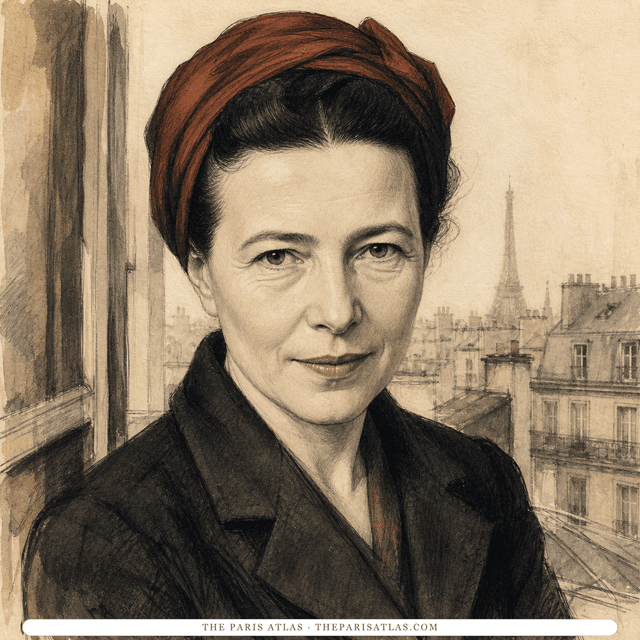
Simone de Beauvoir
French writer and philosopher whose novels, memoirs, and social analysis examined freedom, gender, responsibility, aging, and the material conditions that shape a life.
View author