The old Etonian
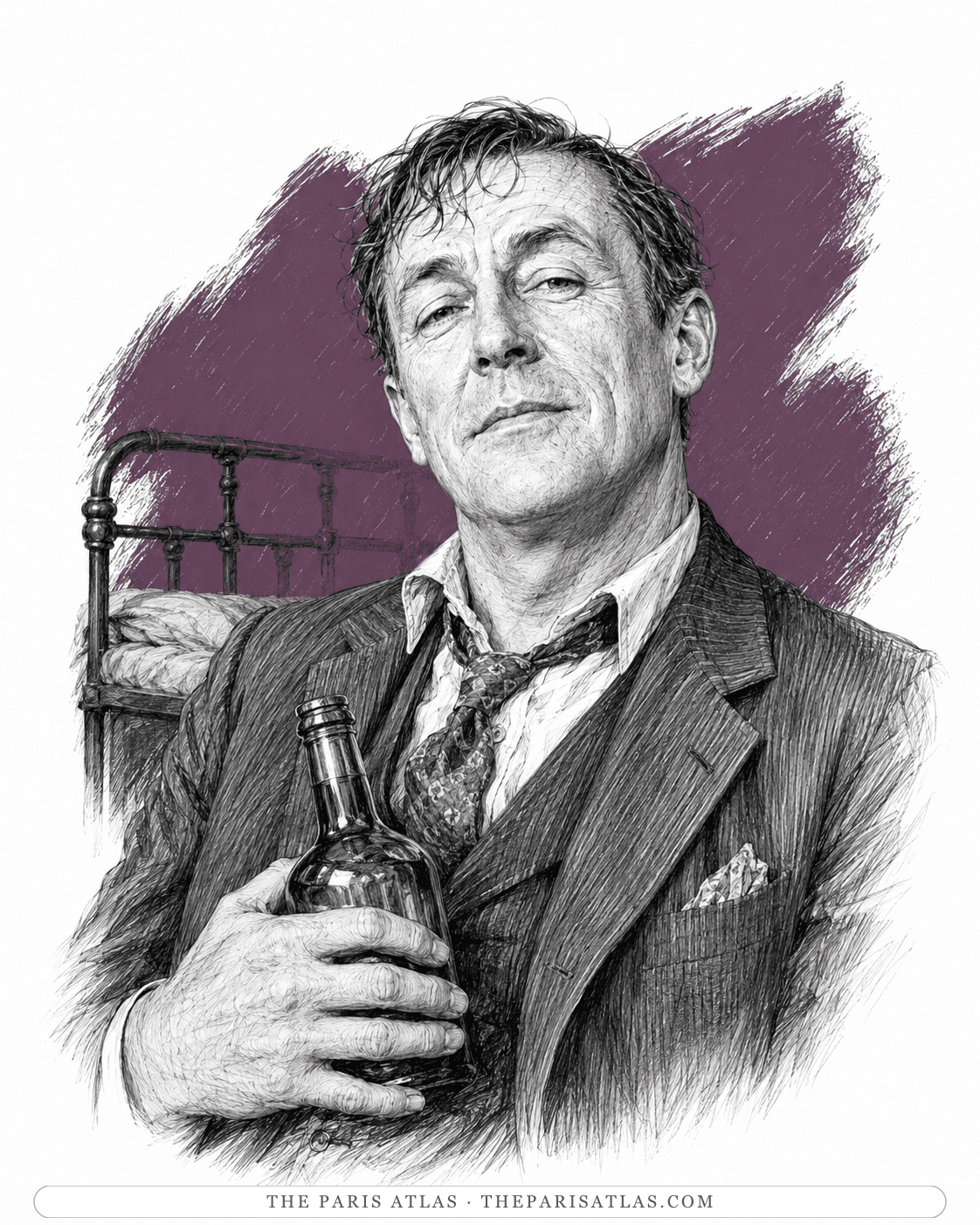
The drunk, educated man who leaned over the narrator's bed in a lodging-house off the Strand to announce that he was an old Etonian, sang the Eton boating song until the room shouted him down, and slept in his boots with a bottle of cherry brandy in his arms.
In George Orwell's account, company from somebody of his own background. He introduces himself by his school, tells Orwell that men who have come down in the world ought to hang together, and offers him a drink.
The book

At a glance
- A lodger in the eleven-penny house near the Strand
- Never given; Orwell prints only an initial he blanks out
- About fifty
- An Eton education, and a long way down from it
- Chapter XXIX
Who they are in the book
Spoiler-freeGeorge Orwell and Paddy Jaques took beds at elevenpence in a lodging-house in a back alley near the Strand, a dark, evil-smelling place. Downstairs two newspaper sellers were bargaining in front of the fire, one of them stark naked, over the price of the clothes the other was standing in; they settled at five and six and swapped in three minutes. Upstairs the dormitory held fifteen beds two feet apart and reeked of urine so badly that Orwell tried at first to breathe in shallow puffs.
A man loomed out of the darkness over Orwell's bed, having overheard him speak to Paddy, and began in an educated, half-drunken voice. Was he an old public schoolboy? One did not meet many of the old school here. He announced that he was an old Etonian and quavered out the boating song, not untunefully, until several lodgers shouted at him to stop. He called the others low types who could not come down in the world if they tried, said that men like the two of them who had come down ought to hang together, and offered Orwell a drink. Then he lost his balance and fell heavily across Orwell's legs, and Paddy hauled him upright and told him to get back to his bed.
He crawled under the sheets fully dressed, boots included. Several times in the night Orwell heard him murmuring that he was past redemption, which is what he said his friends told him, and which seemed to appeal to him. In the morning he was asleep with the bottle clasped in his arms: a man of about fifty, with a refined, worn face, and, oddly for the room, quite fashionably dressed. His good patent-leather shoes were sticking out of the filthy bed. Orwell notes that the cherry brandy must have cost about a fortnight's lodging, so the man could not have been seriously hard up, and offers a guess at what he was doing there, marked as a guess.
How The old Etonian Is Portrayed
- The introductionHe leaned over the bed in the dark, having heard Orwell's voice, and asked whether he was an old public schoolboy. He supplied his own answer before Orwell gave one.
- The songHe got through two lines of the Eton boating song, not untunefully, before the dormitory told him to stop making the noise.
- Past redemptionHis friends' verdict on him, which he quoted with something like satisfaction and repeated to himself several times during the night.
- The fallHe produced a bottle of cherry brandy, offered a glass, and went over sideways across Orwell's legs. Paddy Jaques put him back on his feet and sent him to bed.
- In the morningAsleep fully clothed with the bottle in his arms and his boots on. About fifty, refined and worn in the face, and better dressed than anyone in the house; his patent-leather shoes stuck out of the bed.
- The arithmeticA bottle of cherry brandy came to roughly a fortnight's lodging. Orwell concludes from that he was not really destitute, and wonders in one sentence what else brought him to a house of that reputation.
If you like Down and Out in Paris and London


If you like George Orwell
Explore authors with a similar voice, perspective, and influence.

Henry Miller
The Brooklyn dropout who arrived in Paris broke at thirty-eight and wrote the exuberant, banned books that ended American censorship.
View author
Louis-Ferdinand Céline
The doctor of the Paris slums who wrote the century's blackest, funniest novel — and changed the sound of French prose.
View author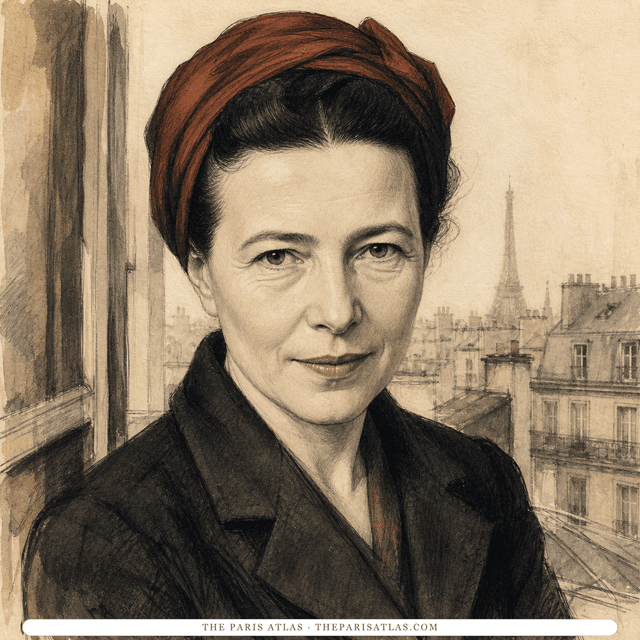
Simone de Beauvoir
French writer and philosopher whose novels, memoirs, and social analysis examined freedom, gender, responsibility, aging, and the material conditions that shape a life.
View author