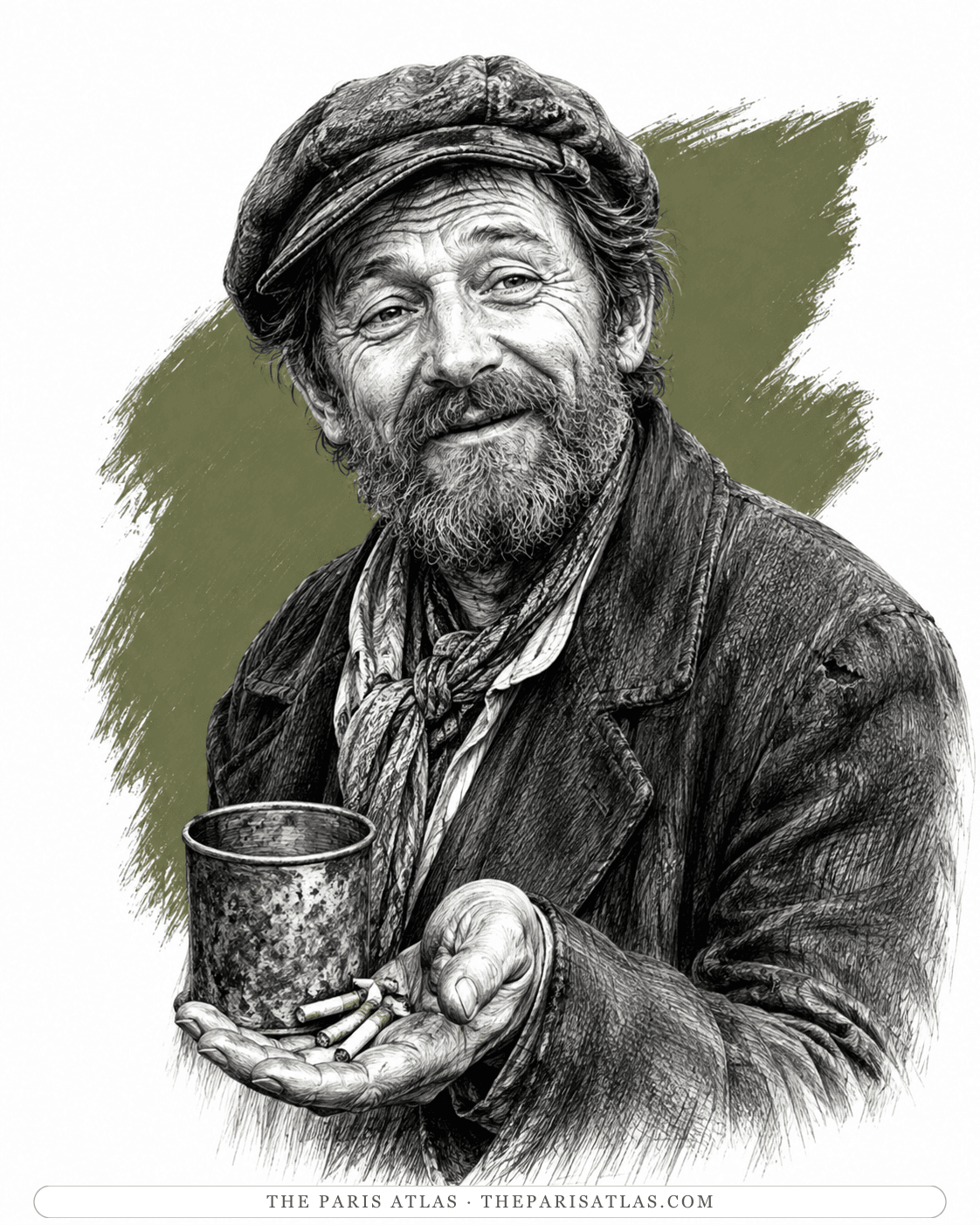
Scotty
A little hairy Glasgow tramp locked up with the narrator for a Sunday at Lower Binfield, who lost his tin of cigarette ends in the search, was given a smoke, and ran up the road the next morning to pay it back.
In George Orwell's account, to be square with a man who did him a favour. He runs the best part of a mile to hand back four cigarette ends, saying that one good turn deserves another.
The book

At a glance
- A casual held over the weekend at the Lower Binfield spike
- Glasgow, by his accent
- A rusty tin of cigarette ends, confiscated and returned
- Chapter XXXV
Who they are in the book
Spoiler-freeMen taken into the Lower Binfield spike on a Saturday were held over the weekend. After breakfast and the doctor's inspection the Tramp Major herded them into the dining-room and locked the door: a limewashed, stone-floored room with deal benches, a clock, a copy of the workhouse rules, and barred windows too high to see out of. Most of them sat there for ten continuous hours. Smoking was the only thing to do, and it was connived at so long as nobody was caught at it.
Scotty had nothing to smoke. His tin of cigarette ends had fallen out of his boot during the search at the gate and been impounded. George Orwell stood him the makings of a cigarette, and the two of them smoked furtively, pushing the ends into their pockets like schoolboys whenever they heard the Tramp Major coming. Orwell describes him as a little hairy tramp with a bastard accent sired by Cockney out of Glasgow. Nothing else about his history is given.
The next morning the men dispersed at ten. Orwell and Paddy Jaques turned north for London on a quiet road in fine autumn weather, and heard a hurried step behind them. Scotty had run after them and arrived panting, with the rusty tin in his hand: the Tramp Major had returned it at the gate. He said that one good turn deserves another, and put four cigarette ends into Orwell's hand. Orwell's description of them, sodden and loathly, is the last line of the chapter.
How Scotty Is Portrayed
- How the book describes himLittle and hairy. Orwell gives him no age, no history and no trade beyond that.
- The accentOrwell calls it a bastard accent, sired by Cockney out of Glasgow, and gives no other account of where the man came from.
- The confiscated tinHis cigarette ends fell out of his boot during the search and were taken, which left him the one man in a room of smokers with nothing to smoke.
- Ten hours on a benchThe Sunday lock-in at Lower Binfield, in a room furnished with benches, a clock and the workhouse rules. Orwell got out of part of it by being sent to help in the kitchen.
- The debtHe came up the road at a run the next morning, smiling like a man repaying an obligation, and handed over four cigarette ends for the one cigarette he had been given.
If you like Down and Out in Paris and London


If you like George Orwell
Explore authors with a similar voice, perspective, and influence.

Henry Miller
The Brooklyn dropout who arrived in Paris broke at thirty-eight and wrote the exuberant, banned books that ended American censorship.
View author
Louis-Ferdinand Céline
The doctor of the Paris slums who wrote the century's blackest, funniest novel — and changed the sound of French prose.
View author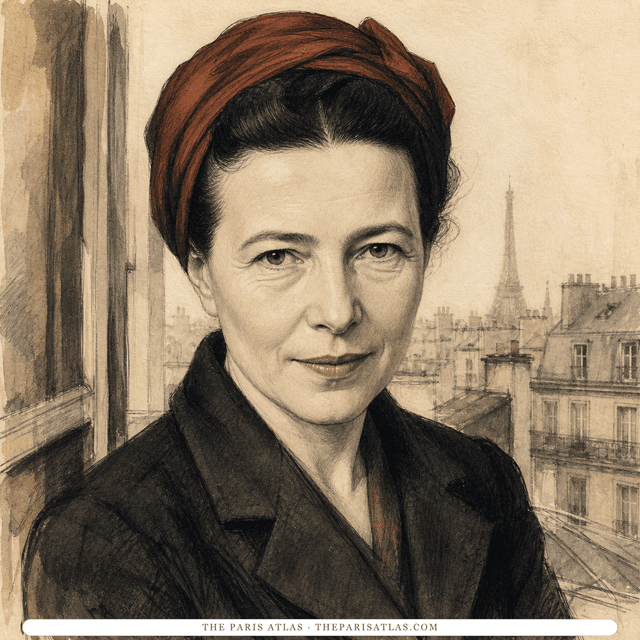
Simone de Beauvoir
French writer and philosopher whose novels, memoirs, and social analysis examined freedom, gender, responsibility, aging, and the material conditions that shape a life.
View author