The young clerk at the shelter
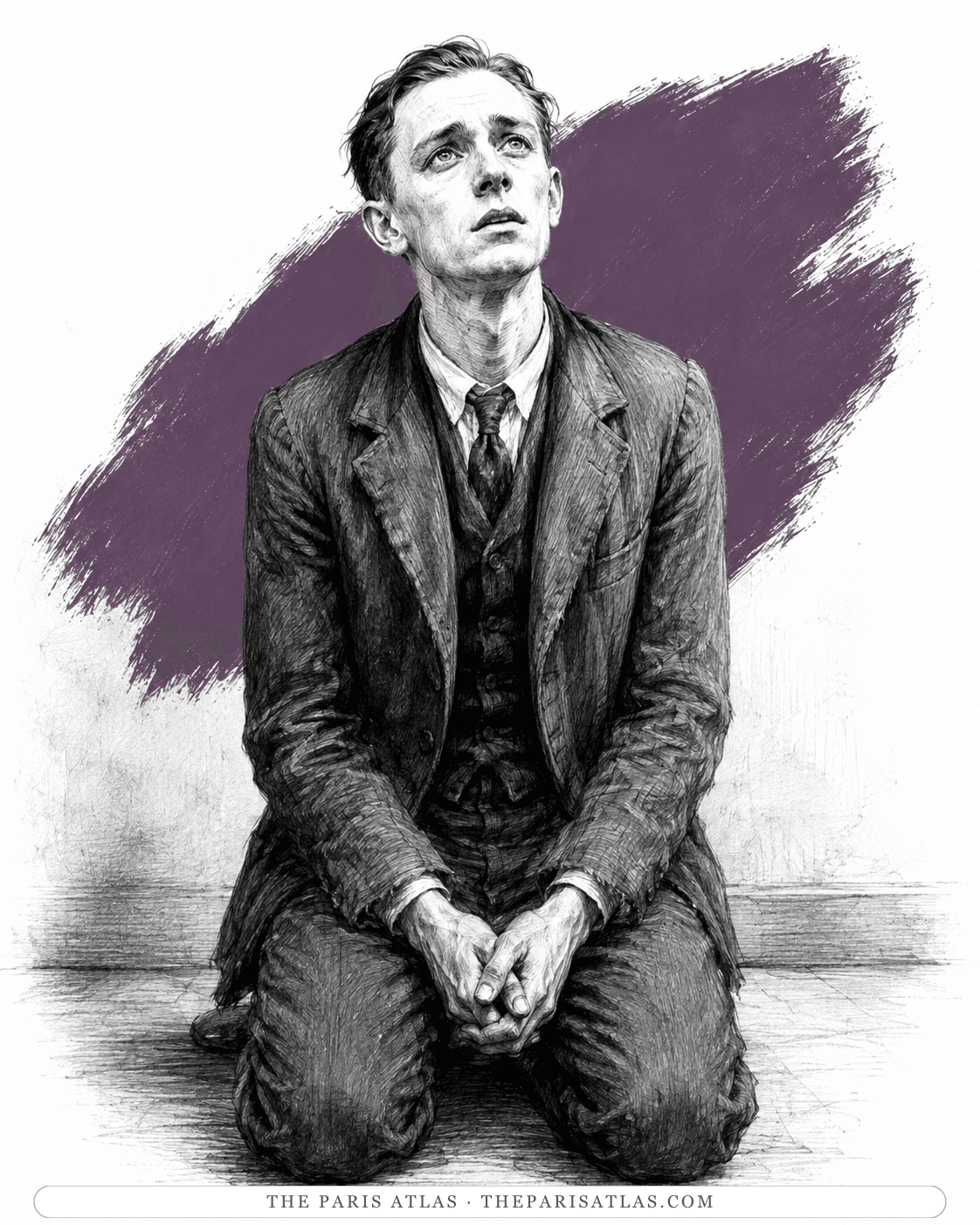
A tall, pale young man boasting to a table of out-of-work clerks in a Salvation Army shelter that he needed nobody's help to get a job. The narrator found him an hour later alone in the reading room, on his knees.
In George Orwell's account, the job he keeps announcing. He tells a table of men in the same position that he will have it tomorrow, and that he needs nobody's help to get it.
The book

At a glance
- A lodger in a Salvation Army shelter, among the out-of-work clerks
- Never given
- Chapter XXIX
Who they are in the book
Spoiler-freeThe Salvation Army shelter charged eightpence for a bed. Its main hall was a great whitewashed barn with no fires, where two hundred subdued people sat packed on long wooden benches under pictures of General Booth and notices forbidding cooking, drinking, spitting, swearing, quarrelling and gambling. George Orwell found these shelters drearier than the worst common lodging-houses, and says so because of the people in them: decent, broken-down men who have pawned their collars and are still trying for office jobs, for whom a clean shelter is the last clutch at respectability.
Among a group of them a tall, thin, deadly pale young man was talking excitedly and thumping the table. When the officers were out of hearing he broke into blasphemies. He pointed at the notice on the wall saying that the Lord will provide, and said the Lord had never provided him with anything. He was not one of the down-on-the-knee brigade, he said; he could look after himself; and he was going to get that job tomorrow. Orwell watched him, struck by the feverish way he talked, and thought he seemed hysterical or perhaps a little drunk.
An hour later Orwell opened the door of a small reading room off the hall. It had no books or papers in it, so hardly anyone went there. The young man was inside alone, on his knees, praying. Orwell had time to see his face before he shut the door again, and writes that it looked agonised, and that quite suddenly he understood from the expression that the man was starving.
How The young clerk at the shelter Is Portrayed
- The boastThumping the table among a group of out-of-work clerks, in a strange feverish style, repeating that he was going to get that job tomorrow.
- The noticeHe pointed at the wall text promising that the Lord will provide, and swore at it as soon as the officers were out of hearing.
- How he lookedTall, thin and deadly pale. Orwell took him at first for hysterical, or slightly drunk.
- The reading roomAn hour later, alone on his knees in the one room nobody used, praying, with an agonised face. Orwell shut the door and understood that he had not eaten.
If you like Down and Out in Paris and London


If you like George Orwell
Explore authors with a similar voice, perspective, and influence.

Henry Miller
The Brooklyn dropout who arrived in Paris broke at thirty-eight and wrote the exuberant, banned books that ended American censorship.
View author
Louis-Ferdinand Céline
The doctor of the Paris slums who wrote the century's blackest, funniest novel — and changed the sound of French prose.
View author
Simone de Beauvoir
French writer and philosopher whose novels, memoirs, and social analysis examined freedom, gender, responsibility, aging, and the material conditions that shape a life.
View author