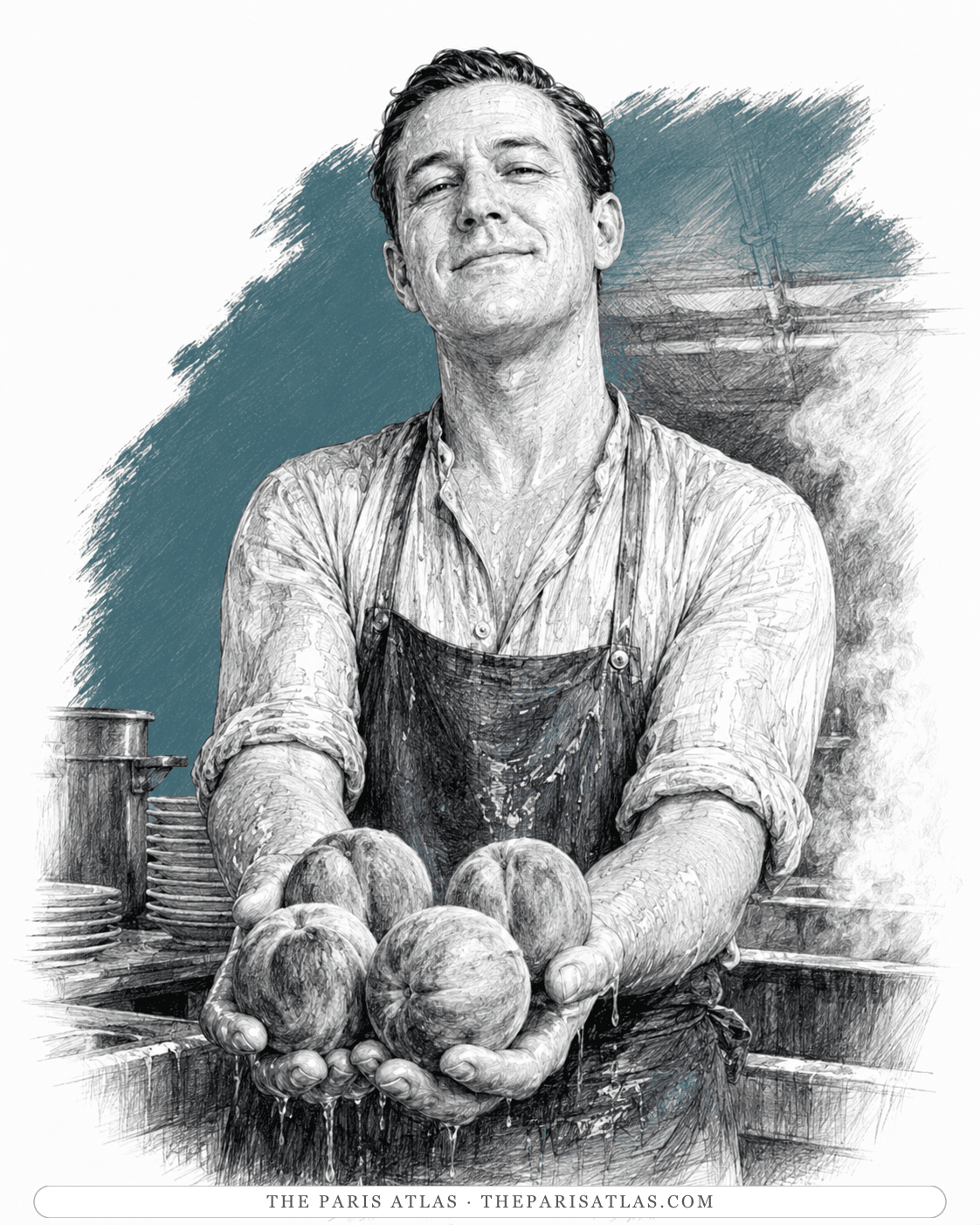
The German plongeur
A kitchen dishwasher at the Hôtel X known through the basement as a débrouillard, the man who gets it done somehow. An English lord asked for peaches late at night when there were none in the hotel and the shops were shut. He went out, came back in ten minutes with four, stolen from a neighbouring restaurant, and the lord paid twenty francs each.
To be known as the man who can get it done. Orwell writes that being called a débrouillard is the thing every dishwasher in that kitchen wants, and the German is the one he names as having the reputation.
The book

At a glance
- A dishwasher in the kitchens of the hotel Orwell calls the Hôtel X
- A débrouillard — the man who gets it done somehow
- Sixty to a hundred a week, by Orwell's reckoning
- Four, fetched in ten minutes, sold on at twenty francs each
- Chapter XIV
Who they are in the book
Spoiler-freeGeorge Orwell's Down and Out in Paris and London, published in 1933, is his own account of the months he spent washing dishes in Paris hotel kitchens and then tramping the roads of England. The German worked beside him in the basement of the grand hotel Orwell calls the Hôtel X, doing the same job. Orwell never gives his name.
The job was plongeur, the dishwasher and general drudge of a French kitchen. Orwell is blunt about what it offered: no prospects, no skill, nothing interesting in it, sixty to a hundred hours a week, and wages too small to save a penny from. The most a man could hope to climb to was night-watchman or lavatory attendant.
The one thing the work did offer was a reputation. The word the kitchen used was débrouillard, meaning a man who, when he is told to do something impossible, goes and does it anyway. Orwell says it is what every plongeur wants to be called, and the German had it.
The story that earned it: an English lord came to the hotel one night and asked for peaches. There were none in the building, it was late, and the shops were shut. The waiters were in despair. The German said leave it to me, walked out, and was back inside ten minutes with four peaches. He had gone into a restaurant nearby and stolen them. The lord paid twenty francs a peach.
How The German plongeur Is Portrayed
- What the job wasWashing up in the basement of a large Paris hotel, sixty to a hundred hours a week. Orwell says all that is asked of a plongeur is to be constantly on the run and to put up with the heat and the hours, and that the job leaves neither money nor time to train for anything better.
- DébrouillardThe kitchen's highest compliment, and the German was known by it throughout the basement. It means a man who will manage it somehow, whatever he is asked for.
- The night the English lord wanted peachesA guest ordered peaches late at night. The hotel had none, the shops were closed, and the waiters had no idea what to tell him. The German said leave it to me and went out.
- Where the peaches came fromHe was back in ten minutes with four of them, taken from a restaurant down the road. The lord paid twenty francs each for fruit that had been stolen a few minutes earlier from a kitchen nearby.
- Why Orwell tells the storyAs an example of what he calls the pride of the drudge. At that level of work, he writes, being equal to any amount of it is about the only distinction a man can get, so the men competed at it.
If you like Down and Out in Paris and London


If you like George Orwell
Explore authors with a similar voice, perspective, and influence.

Henry Miller
The Brooklyn dropout who arrived in Paris broke at thirty-eight and wrote the exuberant, banned books that ended American censorship.
View author
Louis-Ferdinand Céline
The doctor of the Paris slums who wrote the century's blackest, funniest novel — and changed the sound of French prose.
View author
Simone de Beauvoir
French writer and philosopher whose novels, memoirs, and social analysis examined freedom, gender, responsibility, aging, and the material conditions that shape a life.
View author