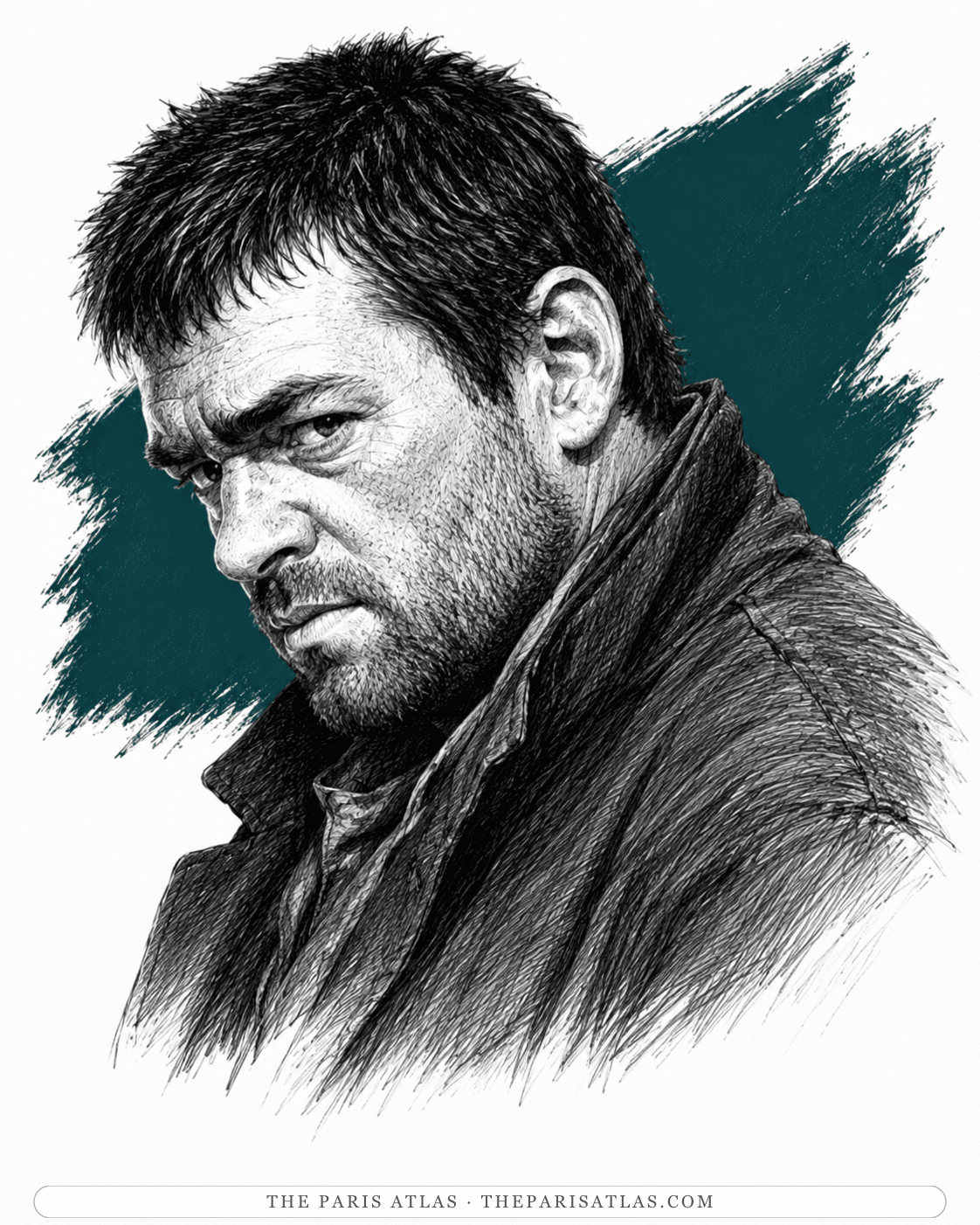
The Magyar
The fourth man in the basement cafeterie of the Hôtel X, known to the staff only by that nickname. He is not the same person as Jules, the waiter later in the book who is also described as a Magyar.
The book

At a glance
- One of four men in the cafeterie of the Hôtel X
- None given; the staff's nickname is all the book has
- Orwell guesses Transylvania and does not claim to know
- Five hundred francs a month and food
- Chapters XI and XIII, in passing
Who they are in the book
Spoiler-freeThe Hôtel X was a large luxury hotel near the Place de la Concorde where George Orwell washed dishes before he moved to the Auberge de Jehan Cottard. He worked in the cafeterie, the basement room that sent breakfasts, coffee and cold drinks up five floors by service lift. Four men worked there: Orwell, his friend Boris, an Italian named Mario, and a man the staff called the Magyar.
Orwell describes him as hairy and uncouth, thinks he was probably a Transylvanian or from somewhere further off still, and never establishes his name or his nationality. He was the small one in a room of big men, which mattered at the rush hours, when the four of them collided constantly. His job was largely to follow Mario, who had worked fourteen years in the cafeterie and could run it single-handed while shouting directions and singing snatches of Rigoletto. Orwell's summary of the room is that Mario was wonderful, the Magyar was very stupid, Boris shirked because of his lame leg, and he himself did not know what he was doing.
How The Magyar Is Portrayed
- How Orwell describes himHairy and uncouth, and the smallest man in a cafeterie where everyone else was big. Orwell also calls him very stupid, in the same sentence in which he calls himself inexperienced.
- What the cafeterie men woreA blue apron and a pile of dishcloths, handed out in the hotel laundry on a new man's first morning. Blue-aproned men were the basement's working uniform, and after a few hours at the gas fires the aprons were soaked through with sweat.
- The nicknameThe staff called him the Magyar. Orwell says he thinks the man was a Transylvanian, or something even more remote, and leaves it there. No name appears anywhere in the book.
- In the cellarThe cafeterie ran between 110 and nearly 130 degrees Fahrenheit, and stepping into the ice cupboard at the far end dropped a hundred degrees in a stride. The four of them sucked chunks of ice while they worked.
- The payFive hundred francs a month and food, the standard rate. Mario was paid a thousand, because the owner knew what he was worth.
- The day he was illHe appears once by his absence. A Serbian extra was engaged at twenty-five francs for the day to cover for him, worked hard until noon, then turned sulky, stole wine and was sacked for smoking.
- Not the same as JulesJules, the second waiter at the Auberge de Jehan Cottard later in the book, is also described as a Magyar. He is a different man: named, small, sharp-featured, bespectacled, talkative, a former medical student, and working in another establishment several chapters on. The two share a nationality and nothing else.
If you like Down and Out in Paris and London


If you like George Orwell
Explore authors with a similar voice, perspective, and influence.
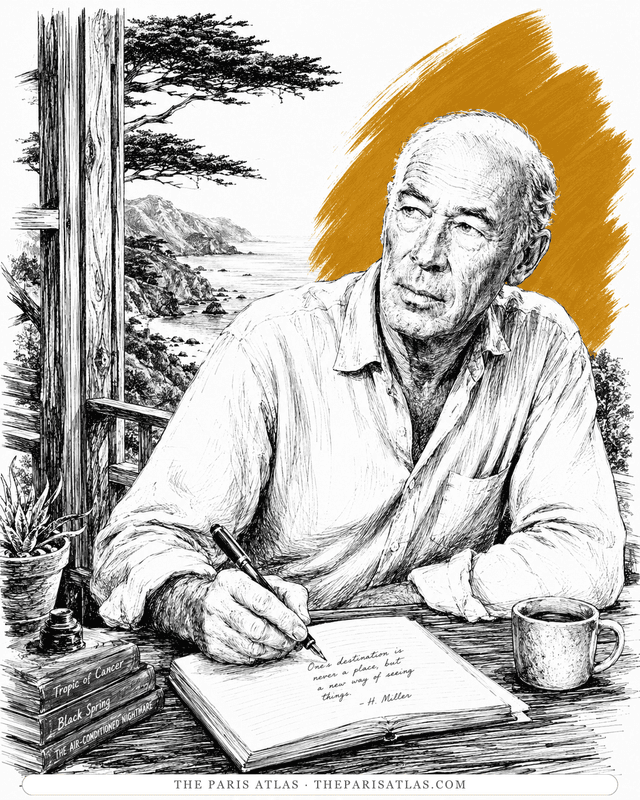
Henry Miller
The Brooklyn dropout who arrived in Paris broke at thirty-eight and wrote the exuberant, banned books that ended American censorship.
View author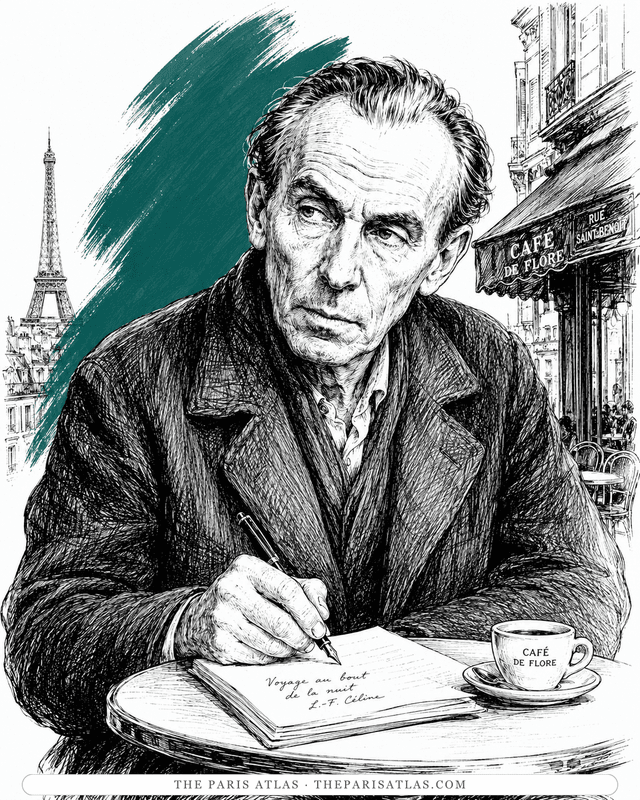
Louis-Ferdinand Céline
The doctor of the Paris slums who wrote the century's blackest, funniest novel — and changed the sound of French prose.
View author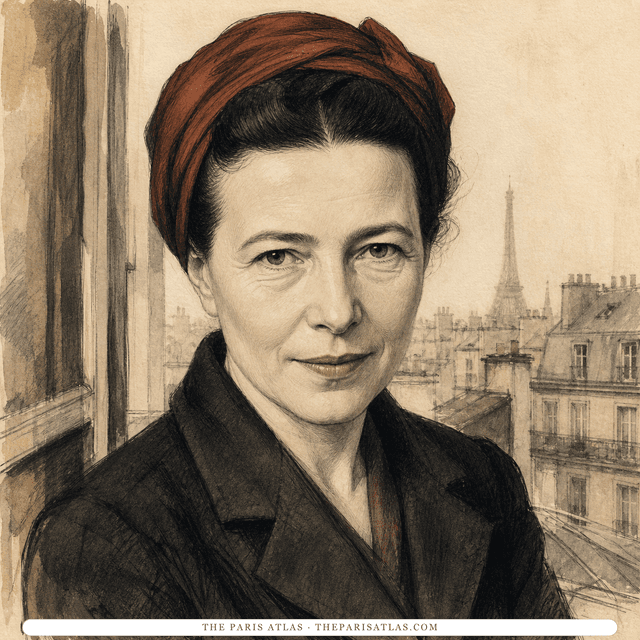
Simone de Beauvoir
French writer and philosopher whose novels, memoirs, and social analysis examined freedom, gender, responsibility, aging, and the material conditions that shape a life.
View author