
R.
An Englishman in the narrator's Paris quarter who drinks four litres of wine a day and talks about antique furniture.
Nothing past the next drink, in Orwell's telling. The one journey the book credits him with, as far as the Azores, was made because the wine there is cheaper than anywhere else in Europe.
The book

At a glance
- R., an Englishman in the narrator's quarter; the book gives him an initial and no name
- Six months in Putney with his parents, six months in France
- Four litres of wine a day, six on Saturdays
- Gentle, domesticated, never quarrelsome, never sober
Who they are in the book
Spoiler-freeGeorge Orwell lists R. among the eccentrics of the rue du Coq d'Or, the Paris slum street where the narrator lodges, and gives him an initial rather than a name. He is English, and he divides his year in half: six months in Putney with his parents, six months in France. Apart from the narrator himself, he is the only Englishman in the quarter.
During the French half of the year he drinks four litres of wine a day, and six on Saturdays. Orwell calls him a gentle, domesticated creature, never rowdy or quarrelsome, and never sober.
How R. Is Portrayed
- The routineHe lies in bed until midday. From then until midnight he is in his corner of the bistro, drinking quietly and methodically.
- The subjectWhile he drinks he talks, in what Orwell calls a refined, womanish voice, about antique furniture. The book records no other topic.
- The AzoresHe had once travelled as far as the Azores, for the single stated reason that the wine there is cheaper than anywhere in Europe.
- Saturday nightOn the Saturday evening Orwell describes in full, with the bistro packed, everyone singing, a man dancing with a wooden phallus and Charlie declaiming poetry, the one glimpse of R. is of a cadaverous, silent figure sitting in his corner quietly boozing.
If you like Down and Out in Paris and London


If you like George Orwell
Explore authors with a similar voice, perspective, and influence.
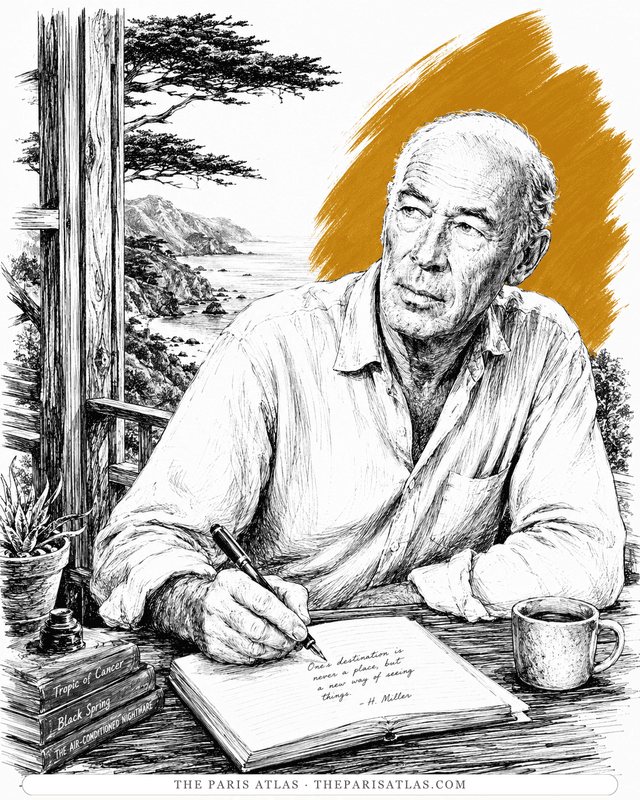
Henry Miller
The Brooklyn dropout who arrived in Paris broke at thirty-eight and wrote the exuberant, banned books that ended American censorship.
View author
Louis-Ferdinand Céline
The doctor of the Paris slums who wrote the century's blackest, funniest novel — and changed the sound of French prose.
View author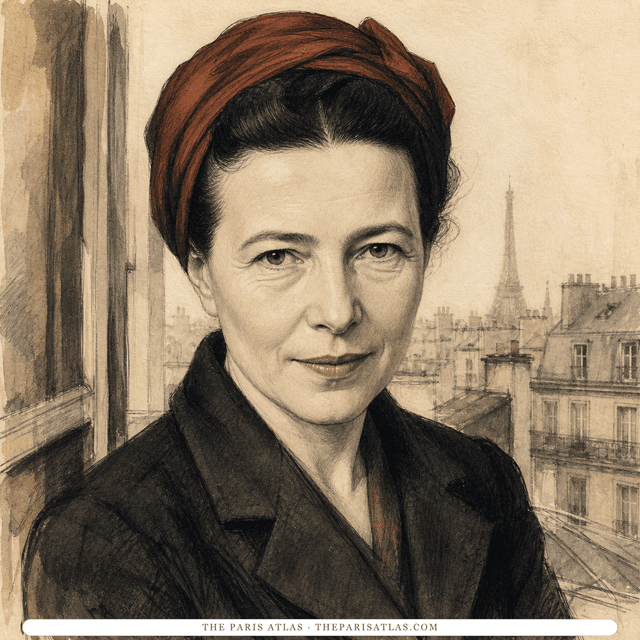
Simone de Beauvoir
French writer and philosopher whose novels, memoirs, and social analysis examined freedom, gender, responsibility, aging, and the material conditions that shape a life.
View author