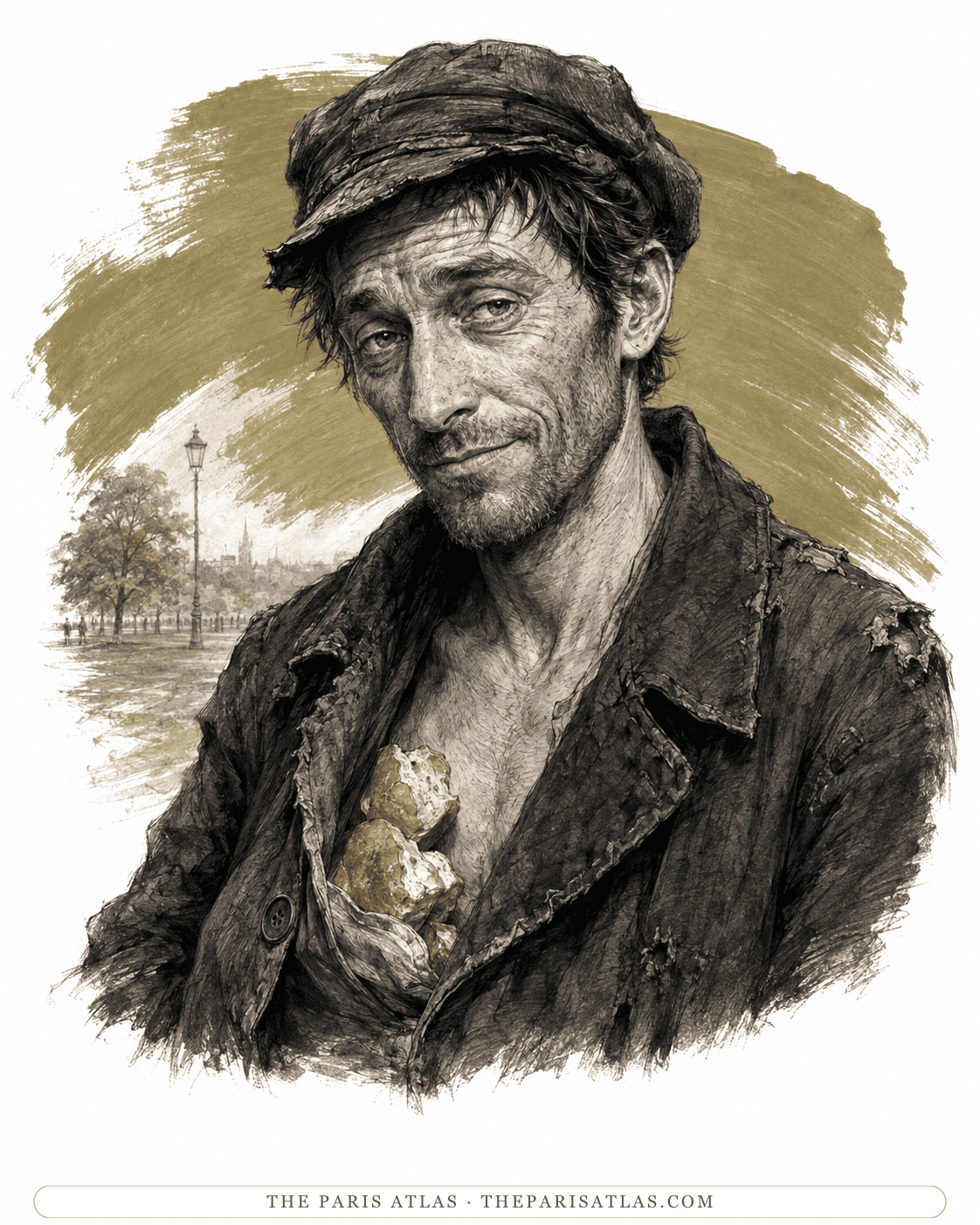
Bill the moocher
A tramp the narrator meets at a camp in Kent in the London half of the book: strong, cheerful, openly opposed to work, and living entirely by begging bread from shopkeepers.
To keep living without wages. In Orwell's account he treats a week's pay as something to be drunk through so that the begging can start again, and he tells his seven days in jail as a good story.
The book

At a glance
- At a tramps' camp near Cromley, Kent
- Mooching — begging, chiefly from shopkeepers
- Says he can get navvying work any time, and drinks the first week's wages
- Seven days for begging, in Oxford
- Outside the spike at Lower Binfield, sharing out bread
Who they are in the book
Spoiler-freeGeorge Orwell meets Bill in the second half of the book, at a roadside camp near Cromley in Kent where a dozen tramps are waiting for the casual ward to open. Orwell calls him a genuine sturdy beggar of the old breed, strong as Hercules and a frank foe of work.
His account of himself is that he could get a navvying job whenever he liked, and did, until his first week's wages arrived and he drank them and was sacked. Between jobs he mooched, mostly from shopkeepers, and he had a working map of the country organised around it. Kent was finished, he said, because too many men had begged it out. Oxford was where he had done best.
He tells the rest of it as a joke against himself. Caught begging in Oxford after asking a clergyman for threepence, he was given seven days, and his conclusion was that he no longer mooched from parsons. Orwell sees him once more, outside the spike at Lower Binfield, where he unloads the stale bread he has been carrying between his coat and his bare skin and shares it out. He is one of three people Orwell names in the second-to-last paragraph of the book, with Mario and Paddy Jaques, as someone he would like to have known properly rather than in passing.
How Bill the moocher Is Portrayed
- BuildStrong as Hercules, by Orwell's description, and fat and jolly with it. He smelled faintly of beer, which Orwell notes had become an unusual smell on a tramp.
- ClothesA corduroy suit, a scarf and a cap, with no socks and no linen under them. Orwell reads the outfit as proof that begging was paying him badly.
- The mooching mapHe rated counties by what they yielded. Kent was worked out and its bakers had turned hostile. Oxford was the best he had found, good for bread, bacon, beef and a nightly bed.
- The parsonCaught begging in Oxford after asking a clergyman for threepence. His denial failed when the policeman pulled meat and two loaves out of his coat, and he was given seven days.
- Sharing outAt Lower Binfield he produced the bread he had mooched from bakers, carried against his skin under his coat, and divided it among the men waiting for the spike.
If you like Down and Out in Paris and London


If you like George Orwell
Explore authors with a similar voice, perspective, and influence.

Henry Miller
The Brooklyn dropout who arrived in Paris broke at thirty-eight and wrote the exuberant, banned books that ended American censorship.
View author
Louis-Ferdinand Céline
The doctor of the Paris slums who wrote the century's blackest, funniest novel — and changed the sound of French prose.
View author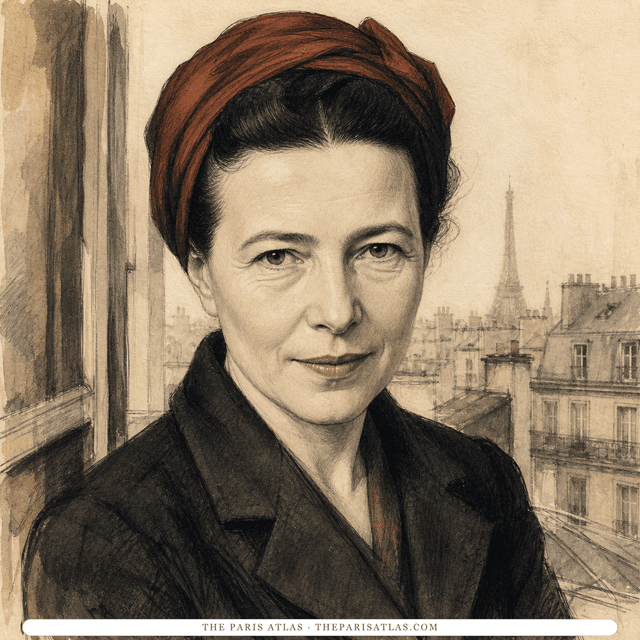
Simone de Beauvoir
French writer and philosopher whose novels, memoirs, and social analysis examined freedom, gender, responsibility, aging, and the material conditions that shape a life.
View author