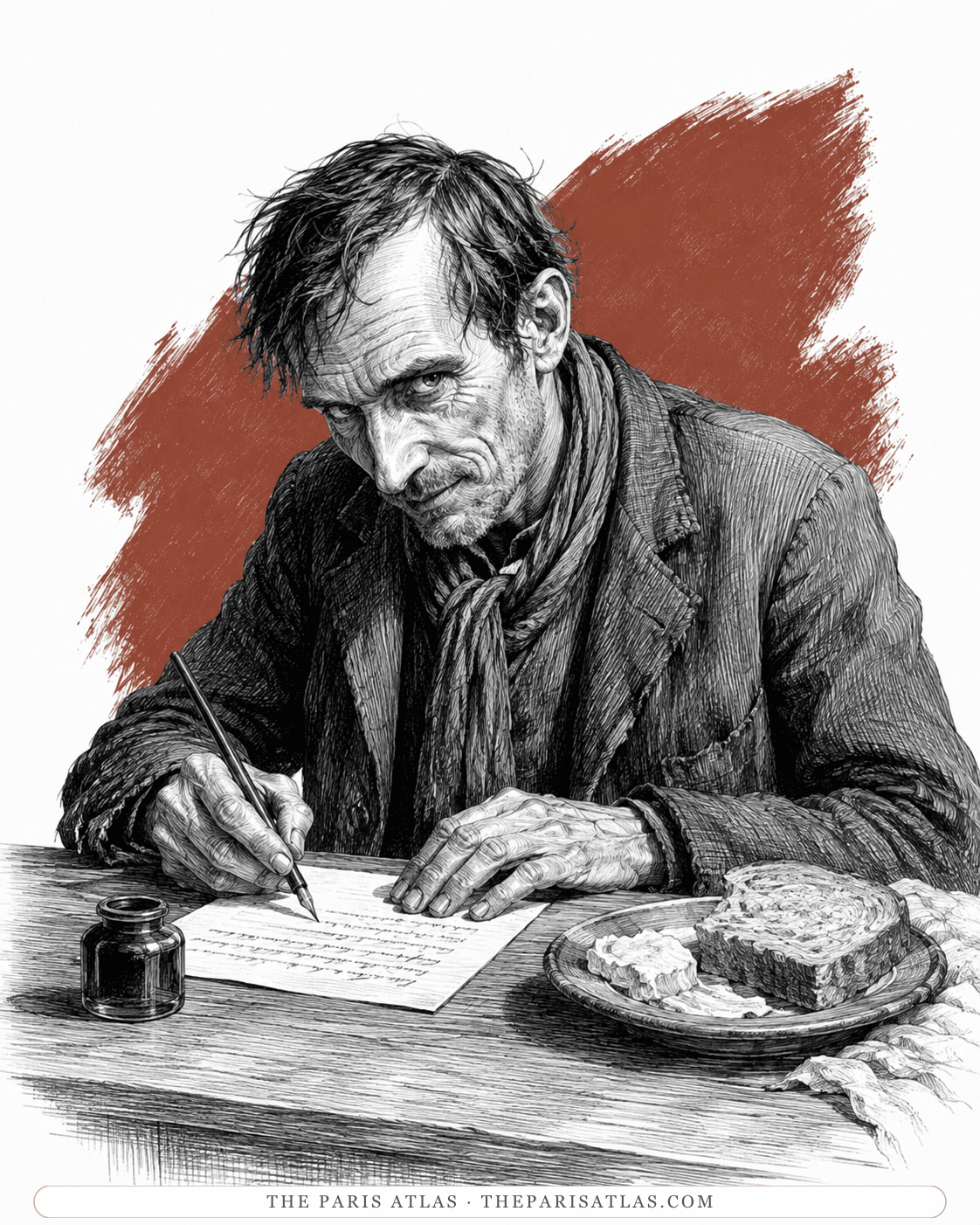
The begging-letter writer
A lodger at Bozo's Lambeth lodging-house who wrote appeals for money towards his wife's funeral, and when one took effect ate the proceeds in single enormous meals of bread and margarine. Orwell talked to him and concluded that, like most swindlers, he believed a good part of his own story.
In George Orwell's account, a letter that brings money in, and then as much bread and margarine as he can eat at one sitting.
The book

At a glance
- A lodger in the Lambeth lodging-house, and a friend of Bozo the pavement artist
- Never given
- Money towards his wife's funeral
- Ninepence a night
- Chapter XXXI
Who they are in the book
Spoiler-freeGeorge Orwell's Down and Out in Paris and London, published in 1933, is his own account of washing dishes in Paris and then tramping in England. For part of the London stretch he lodged in a large house in Lambeth, south of the river, at ninepence a night. It held five hundred men and was a well-known meeting place for tramps, beggars and petty criminals, and Orwell calls it a refuge for that kind of life. One of the lodgers there made his money by writing begging letters.
The letters were appeals for help to pay for his wife's funeral. Orwell files him among swindlers, so the funeral is a story rather than a fact, and the book never establishes that there was a wife. When one of the letters took effect and money came in, he ate it. Orwell's description is of huge solitary gorges of bread and margarine.
Orwell talked to him and came away with the detail he thought worth writing down: like most swindlers, the man believed a great part of his own lies. Orwell did not like him and does not soften it, calling him a nasty, hyena-like creature, and gives him no physical description at all.
He was a friend of Bozo, the pavement artist Orwell spent his London month with, and one of several lives Orwell glimpsed in that house. Among the others were a tramp of seventy called Grandpa who lived largely by collecting cigarette ends and selling the tobacco at threepence an ounce, a struck-off doctor who sold newspapers and gave medical advice at a few pence a time, and a barefoot Chittagonian sailor who had walked off his ship and wandered London for days believing he was in Liverpool.
How The begging-letter writer Is Portrayed
- How he made his moneyWritten appeals for help towards his wife's funeral, sent out to strangers. Orwell counts him among swindlers, and the book never establishes that there was a wife or a funeral.
- What he did when a letter workedAte the proceeds, alone, in what Orwell calls huge solitary gorges of bread and margarine.
- He believed it himselfOrwell talked to him and concluded that, like most swindlers, he believed a great part of his own lies.
- What Orwell thought of himA nasty, hyena-like creature. That is the whole of the description; Orwell gives him no face, no age and no name.
- The house he lived inA lodging-house in Lambeth at ninepence a night, five hundred beds, a known rendezvous of tramps, beggars and petty criminals. His neighbours included a tramp of seventy living off resold cigarette ends and a doctor struck off the register who gave advice at a few pence a time.
If you like Down and Out in Paris and London


If you like George Orwell
Explore authors with a similar voice, perspective, and influence.
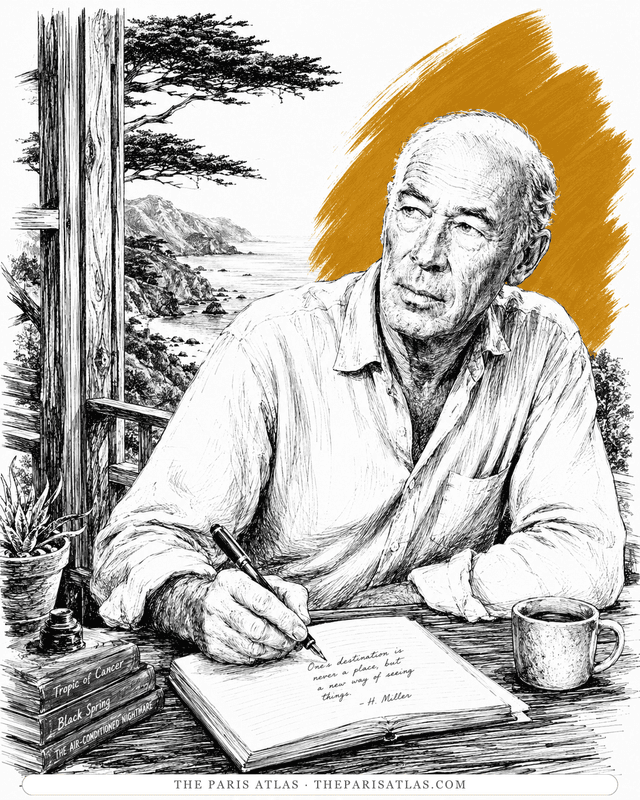
Henry Miller
The Brooklyn dropout who arrived in Paris broke at thirty-eight and wrote the exuberant, banned books that ended American censorship.
View author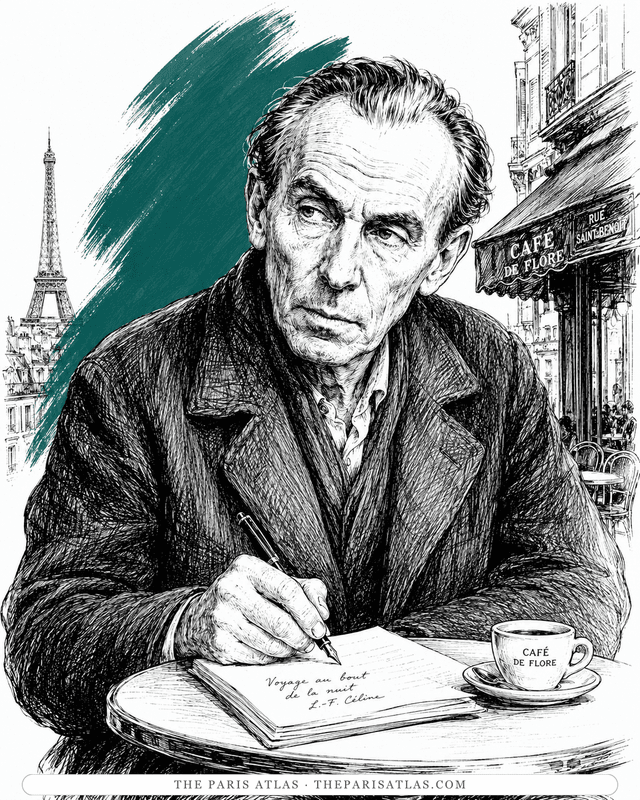
Louis-Ferdinand Céline
The doctor of the Paris slums who wrote the century's blackest, funniest novel — and changed the sound of French prose.
View author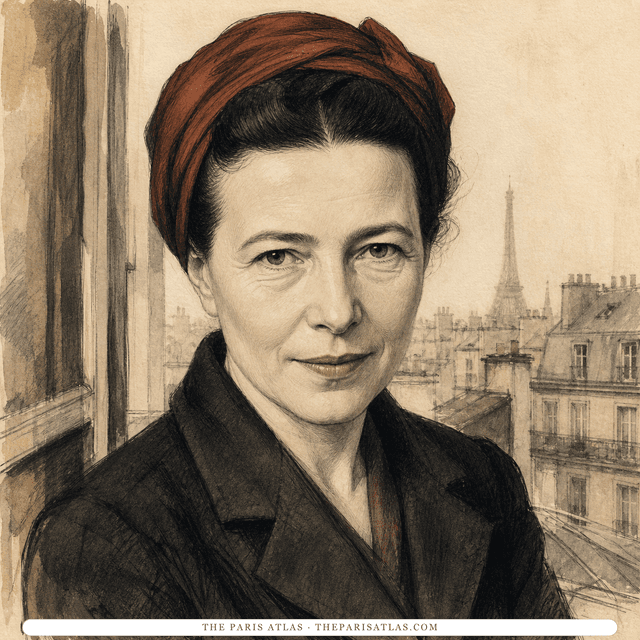
Simone de Beauvoir
French writer and philosopher whose novels, memoirs, and social analysis examined freedom, gender, responsibility, aging, and the material conditions that shape a life.
View author